Sunday, 10 February 2008

Mrs Leicester's School

I've enjoyed rediscovering and sharing some of the vintage children's books I've inherited. Here's one I scooped up years ago in a junk shop in Chelmsford (long since gone) - Mrs Leicester's School by Charles and Mary Lamb, with illustrations by Winifred Green, published by J M Dent in 1899.

The best-known collaboration between Charles Lamb and his sister Mary is their Lamb’s Tales from Shakespeare.


Mrs Leicester’s School was first published in 1809. There’s an excellent essay here, which describes and explains the structure of the original publication and from which the following is a quote:

Mrs. Leicester's School contains ten separate inset tales bound together by the frame narrative which almost wholly recedes by the later stories. This frame is constructed in the 'Dedication' . . . and establishes that the tales are those told by pupils in a school, later written down by their teacher. This structure is similar to that used by Boccaccio in the Decameron, but a greater debt is owed to Sarah Fielding's The Governess (1749). The authors come close to admitting this when they have their narrator, the young teacher, explain that she had read 'in old authors,' - by whom she might mean Fielding (but could just as well be referring to Boccaccio or Chaucer's Canterbury Tales) - 'that it was not infrequent in former times, when strangers were assembled together ... for them to amuse themselves with telling stories, either of their own lives, or the adventures of others' . . . The Lambs' governess' plan is for each child who has come to the school, and is currently lonely and frightened, to tell the story of their life to the assembled class. This will break the ice and, of course, allow plenty of scope for moral and didactic observations.

You can read the whole of the text of Mrs Leicester's School here .

Mary (1764–1847) wrote seven of the stories and Charles (1785-1834) three - 'The Effect of Witch Stories', 'First Going to Church' and 'The Sea Voyage'. Mary suffered from bipolar disorder, murdered her mother and spent a lot of her life in mental institutions, though Charles looked after her himself as best he could.


As a child, I was presented with a copy of Lamb’s Tales by one of my godmothers, but have never really thought about it since I was 12, nor explored the lives of the authors. Suddenly, I feel inspired to add the books reviewed here to my TBR pile. I can’t think why I haven’t already acquired (if not read) Peter Ackroyd’s The Lambs of London, since I’m usually a snapper-up of Ackroyd’s novels, but this one somehow passed me by – a situation which will shortly be remedied.


I’ve also just added Kathy Watson’s The Devil Kissed Her: The Story of Mary Lamb to my bulging Amazon shopping trolley (it’s a double-decker one and will fall right over with a big crash one of these days).


Mrs Leicester’s School is also considered in this highly recommended book, Opening the Nursery Door – which I have a copy of somewhere but annoyingly cannot lay my hands on it (but, as regular visitors know, the disordered state of my bookshelves is legendary).


Anyway, all the above is digressive. I bought my 1899 copy of Mrs Leicester’s School twenty-odd years ago, purely for the delightful chromolithograph colour plates by Winifred Green. As you can see, these are very (very) much in the style of Kate Greenaway.


And yet the linear simplicity and delicate colour palette of Green's flower-encircled vignettes appeal to me more than Greenaway's images. These are less sentimental, cooler, more restrained. I love the plain, upright, painted country furniture and the sprigs-and-stripes fabric designs.

I have not been able to establish anything at all about Green after a medium-sized bout of Googling – although a Winifred Green is mentioned as being the first wife of the artist Ernest Dudley Heath. They married on 23 May 1903 in Hampstead and she died in 1910. Heath had been friendly with the Green family for many years (his elder sister married Winifred’s brother), and Heath went on to become principal of the Hampstead Garden Suburb School of Arts and Crafts, so it’s quite possible that this is the same Winifred – the late nineteenth-century arty-crafty millieu seems to fit. (It almost goes without saying that I’d love to hear from anyone who can shed any further (or definite) light on Winifred Green.)

While the style of the costumes in the illustrations would have been ‘old fashioned’ for 1899 – all high-waisted dresses, bonnets and huge mob caps, they were of course vaguely in keeping with the Regency world of the Lambs. I suspect that this nod towards ‘historical accuracy’ would, however, have been secondary to fact that this kind of idyllic children’s never-land was hugely popular at the time – the principal exponents being Randolph Caldecott, Walter Crane (this links to a Crane site that's elegant, animated and gorgeous) and, as already mentioned, the prolific Kate Greenaway .


Here’s a review of the Winifred Green/Dent edition which appeared in the NYT on Wednesday 2 December 1899 (NB I have applied to the NYT several times in past months for permission to reproduce this on my blog, but answer comes there none. Not a ‘yes’. But on the other hand, not a ‘No’, either. If this finally prompts them to get in touch and demand that I remove it, then of course I will do so, while grinding my teeth at the irony. But it may never happen.)
(click to enlarge image)


Finally, here's the delightful inscription in my copy:

It's a whole story in itself! If your ancestors lived at Colne Priory or you can identify 'Heaven' - do please get in touch.

Operatic moments at half-time

Scuttled back to my desk at half time in the England v Italy match this afternoon, intending to do some work, but ended up (this keeps happening to me!) surfing around YouTube.


Here’s one especially for a friend who’s currently off making music in the great churches of Rome while the rest of us battle on with the laundry and the delights of half term - Anna Netrebko singing E Strano from La Traviata.


. . . and to prove that she can act (all tipsy and consumptive) at the same time as singing, you can watch her performing the same aria at the at the Salzburg Festival here . I simply preferred the dress in this one!

Italy wins hands-down when it comes to opera, of course. No contest. But we did manage to beat them at rugby 23 - 19.

Another stroll at sundown

Perfect weather here all weekend. Springlike. Hopeful.


Saturday, 9 February 2008

Peto PS


Re Gladys Peto, I should have mentioned that you can read a lot more about her (and see a few more of her illustrations) over on The View From the Last House in America (which also, incidentally, has some photos of the kind of winter my children really wish we had in south-east England !)

Friday, 8 February 2008

These 'book' things . . . do you think they will catch on?

Huge heaps of thanks to Susan at Green Chair Press for this one, which has been making me smile during a week when smiles would otherwise have been rather few and far between:

Popping up again

As a postscript to my recent Musing on pop-up books, here's a page from a Japanese site with dozens of pics and video clips of contemporary pop-ups in action.

And thanks to Cathy over on Teacher Features for the link to the website of Paul Johnson.


I especially love the works on his 'commissions' page .

Everyone's no doubt familiar with this Lexus 'pop-up book' car ad:


What I hadn’t realised is that the whole ad was created by engineers in a studio and employed no digital effects at all – which makes it a far more amazing production than it appeared at first glance. (We are so used to computer-generated special effects now that we assume they are all-pervasive and that we know better than to believe our own eyes pretty much the whole time.) You can watch some behind-the-scenes footage here


And I belatedly remembered that I’d seen this inspired pop-up book from Japan last year, on Alex’s excellent Shedworking site - the ultimate 'coffee table book'.


Finally, I'm grateful to Cathy again for introducing me to the exciting paper-cutting work of Danish artist Peter Callesen, which was all completely new to me. Though not strictly 'pop-ups', his thought-provoking cut paper creations are well worth a mention in this context because of their extraordinary ability to tell complex stories in a deceptively simple way. Have a look at his works on water, too.

More Gladys Peto

My previous post about one of my favourite illustrators, Gladys Peto, has proved one of the most popular, most landed-on-via-Google-search, posts in the history of Musings. For an artist at one time so successful and popular there's a surprising dearth of information about Peto or images of her work on the internet.

I've been much too busy with work and other stuff this week to spend any time writing blog posts, but scanning can be done on a multi-tasking basis and uses up only a very tiny percentage of my (already fairly tiny) brain.

So . . . da-daaaah! Here are some more pics from Gladys Peto's Bedtime Stories for your enjoyment.
If anyone knows where I can see some of Peto's textile designs (on the net, in a book or in real life), then please, please get in touch.


As this batch demonstrates, many of Peto's illustrations look like dress fabrics with a few stylised people thrown in almost incidentally.

As if it's almost a struggle for her to include a narrative content because her impulse is so predominantly decorative and two-dimensional.

(All I wanted in the whole world when I was about 8 was one of these rabbit suits . . . !)
I adore these pictures unconditionally because they never fail to take me back to precise points in my childhood, but my impartial adult eye is still capable of reminding me that Peto's figure drawing left rather a lot to be desired!

Anyway, while so heavily into this multi-tasking thing (though I've just noticed that 'drinking wine' has seamlessly taken the place of 'working' as the more complex and demanding simultaneous procedure - didn't even notice it happening! But it is Friday after all, so I'll let myself off), I have been scanning some illustrations from another delightful but rather forgotten vintage children's book. Watch this space.

(Click on the pics to enlarge.)

Monday, 4 February 2008

Congratulations!

Congratulations to Pauline Rowson, whose In Cold Daylight has made it onto the shortlist of the World Books Day Books to Talk About competition. I read this topical thriller in December - but didn't like to say very much about it here for fear of spilling too many plot-related beans. Pauline was one of the very first people I met through blogs and blogging when I first dipped my toes into the great unknown last summer. The energy, enthusiasm and humour with which she promotes her novels are infectious (you can read all about them in her blog) and I'm delighted that she's reached the final ten, which will certainly Spread the Word for her in a big way.


Congratulations also to Candi Miller for hitting the shortlist with Salt & Honey. I read this very recently and I just can't get it out of my mind. An absolutely stunning novel - the culmination of years of research, transformed by Miller's love for Southern Africa and her burning, poetic imagination - I'm thrilled that it's going to receive the exposure it deserves as a result of Books To Talk About.


Now, how am I going to square my nascent plan to read the other eight books on the list with my recent vow of abstemiousness on the book-buying front??? The TBR pile is TOO BIG already. But . . . some of these do look absolutely necessary, somehow, don't they?

Saturday, 2 February 2008

A number of years

48 (forty-eight), being eight more than forty, is the natural number following 47 and preceding 49. It is one third of a gross or four dozens.

48 is (apparently) ‘a double factorial of 6, a highly composite number. Like all other multiples of 6, it is a semiperfect number. 48 is the second 17-gonal number.’

48 is the smallest number with exactly ten divisors.

48 is the atomic number of cadmium.

There are 48 Ptolemaic constellations.


The prophecies of 48 Jewish prophets and 7 prophetesses were recorded in the Tanakh for posterity.

According to the Mishnah, Torah wisdom is acquired via 48 ways.

Siddhartha Gautama, the founder of Buddhism, sat under a bo tree for 48 days attempting to figure life out. Buddhism was the result.

48 is twice the total number of major and minor keys in Western tonal music (twenty-four), not counting enharmonic equivalents.


Johann Sebastian Bach's Well-Tempered Clavier is known as The Forty-Eight because it consists of a prelude and a fugue in each major and minor key, for a total of 48 pieces.

There are 48 hours in two days!

48 is the code for international direct dial phone calls to Poland.

Arizona is the 48th state in the Union.

48 is the number of chromosomes apes have.

In the year 48 AD, after the execution of his wife Messalina, the Emperor Claudius received senatorial approval to marry his niece, Agrippina. In Britain, the Iceni revolted against the Roman governor, Publius Ostorius Scapula, but were defeated.


It’s very strange and peculiar. It doesn’t feel right at all. Bizarre, even. Perhaps it's just a dream.

I’m still wondering what I’m going to do with my life when I’m grown up . . .


Things that didn't go quite according to plan


Well, so much for lunch at the Oyster Bar . . .


Various family members unavoidably detained in Colchester . . .


So called it off, ate a solitary salad at my desk and carried on working instead.


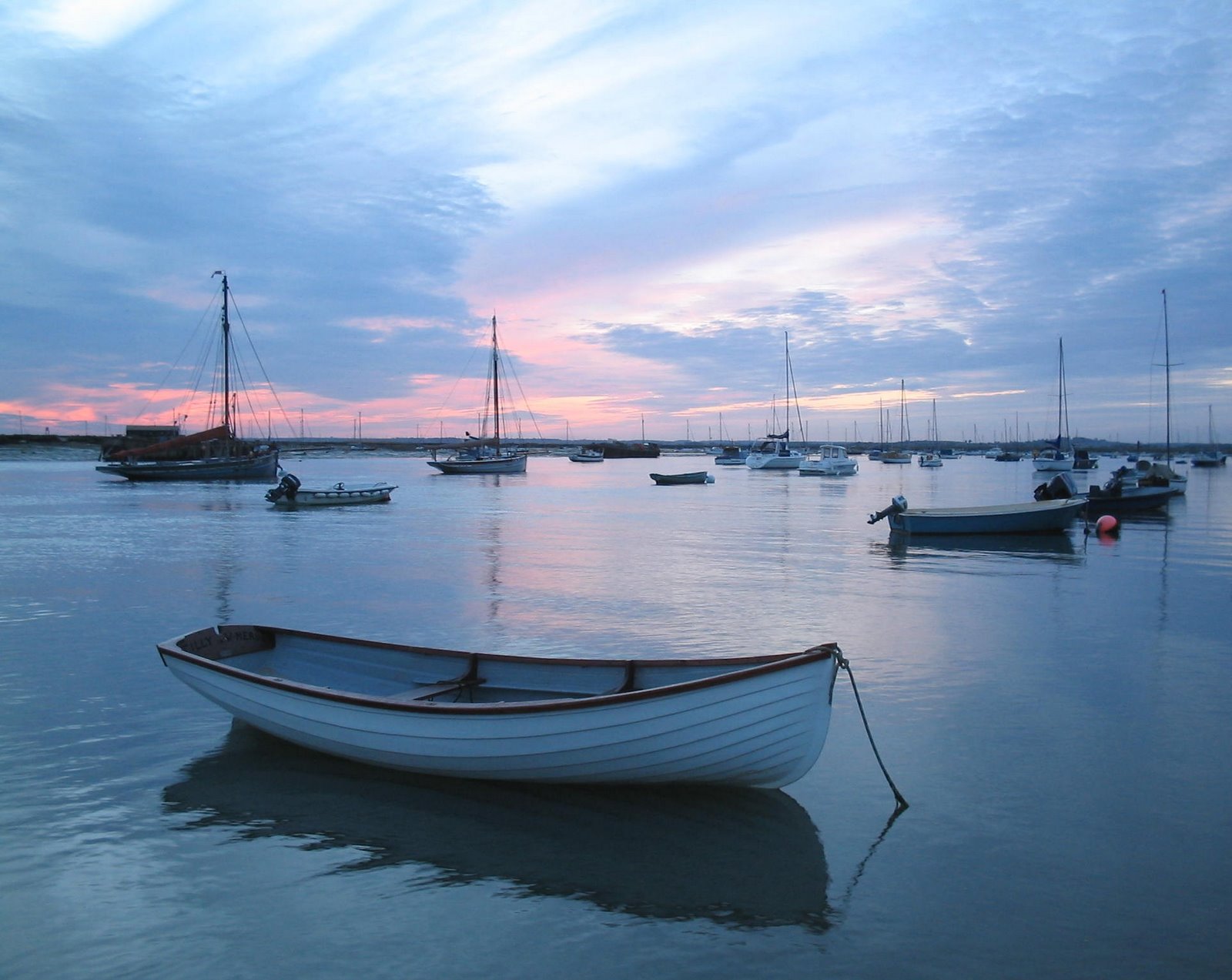
Took the dog out for a stroll round the sea wall.


Cold, quiet, deserted. A subdued, wintry sunset.

Then settled down to watch . . .

Wales beat England!!! Argghh! Unbelievable! How could England let this happen?


(Mind you, could - mutinously - quite happily watch James Hook convert tries all day long . . . and I've never felt that way about a Welshman before!)

Ate consoling cake, then got back to work again (breaking off for my regular appointment with the ER).

Strange old day, on the whole.


Have got a nice new teapot, though!

Friday, 1 February 2008

Lunching at the Company Shed (again)

Lunch with a friend at Mersea's legendary Company Shed today (more links here, here, here and here - oh and also here for pics of the oysters being harvested (go to 'food' and then 'oyster fishermen' ).

We shared scallops in cream with bacon and salad, herrings with yoghurt and dill sauce, and a big bowl of steaming mussels in cider. Bread and wine from Guntons (at the Shed, as I've mentioned before, you just order fish and salad - if you want bread and wine, you bring it along with you).

D-e-l-i-c-i-o-u-s.

More than could be said for the polystyrene-flavoured takeaway tea, purchased elsewhere, with which we attempted to round off the meal, sitting on a bench by the sea, buffetted by a very brisk, cold wind. It was sooooo horrible we were reluctantly forced to take the taste away by eating lots of chocolate.

Put in a few more hours' work and then set off for the beach again at sundown, with boy and dog. Wind even brisker, and skin-scouringly bitter. Didn't trudge for very long in the end. Retreating to a warm house and a mug of (nice) hot tea quickly seemed like a far, far better idea.

Am paying for all this gadding about by having to work all evening now - but . . . it was well worth it.


Tomorrow, lunch will be at Mersea's other fishy eating-place, The Oyster Bar (which got a brief mention in this article late last year) and then it'll be time to snuggle down and watch the first two game in this year's Six Nations. Cosy.