Having recently screamed 'apprised!' at the television in the middle of Lost in Austen (which, incidentally, I will just say I found delightfully silly, hilarious and exuberantly entertaining and I do wish its more surly and humourless critics would just go and blinkin' well 'get a life') - when a character begged to be 'appraised' of a situation . . .
And having recently (with some trepidation) pointed out to a dear and notably (or at least aspiringly) pedantic friend that the person to whom they were referring in an employment reference was 'discreet' and not 'discrete' . . .
And also (confession time now) persistently experiencing that 'have I turned off the cooker?' obsessive compulsive need to check and re-check that I've used the right 'compliment' or 'complement' for the job . . .
1. The Boy is back from his Devon Adventure. Brown, grazed, dirty, smelly, tired but very happy.
2. A particularly tedious and time-consuming manuscript is off my desk at last, so life and work can resume a slightly more normal rhythm, so far as it ever achieves anything resembling 'normality'
3. The gooseberry and elderflower jam is completely the wrong colour but delicious nevertheless. For green gooseberry jam, apparently, one needs hard, under-ripe fruit. Ours were ripe and sweet and beginning to blush (perfect for eating raw), so the jam took longer to set and turned pink. No matter. It's the taste that counts, and on that score I think it can be considered a success. SD#3 designed the labels. Note wholly misleading jam-jar lid! I've run out of Kilner jars and so am employing the dregs of the recycled collection.
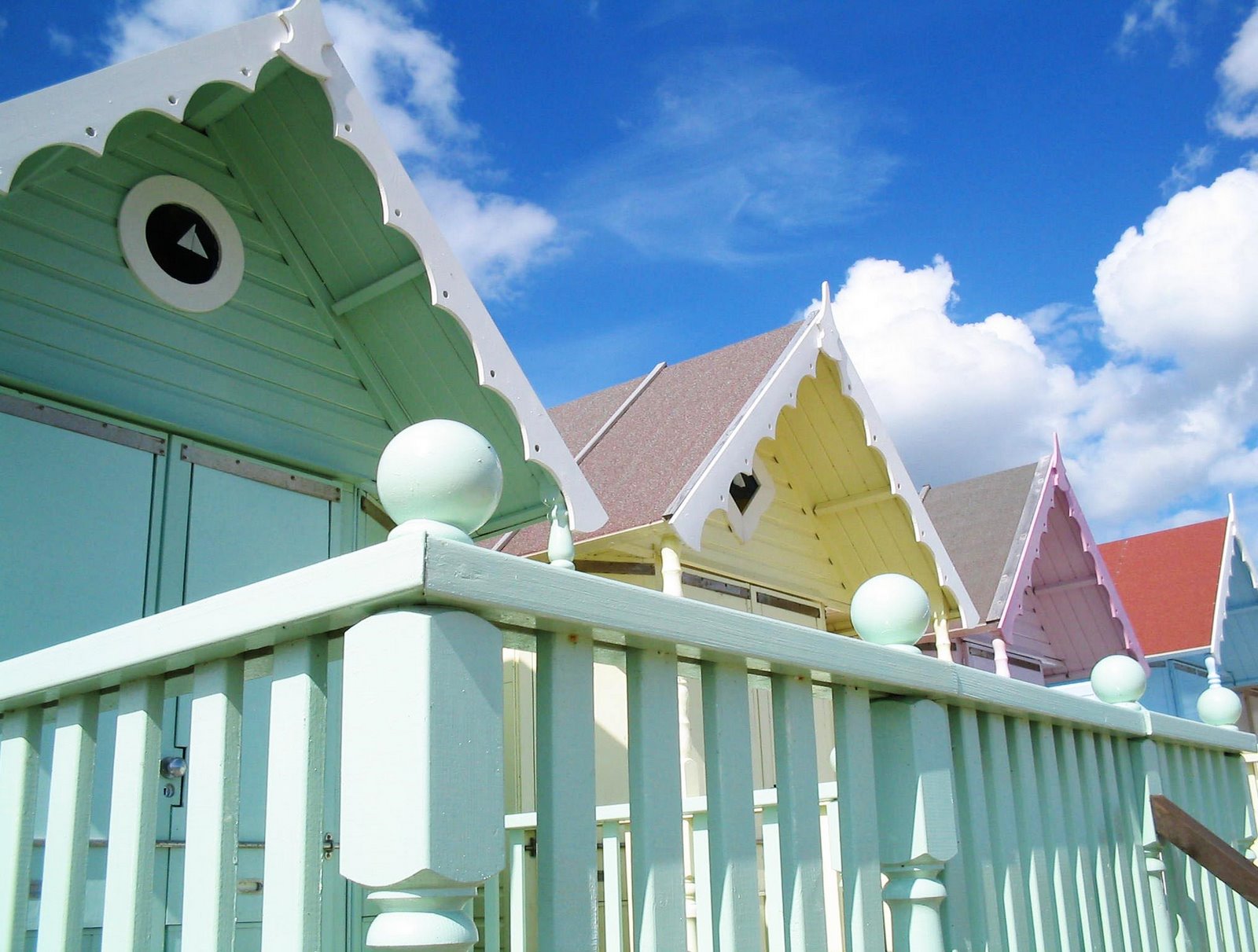
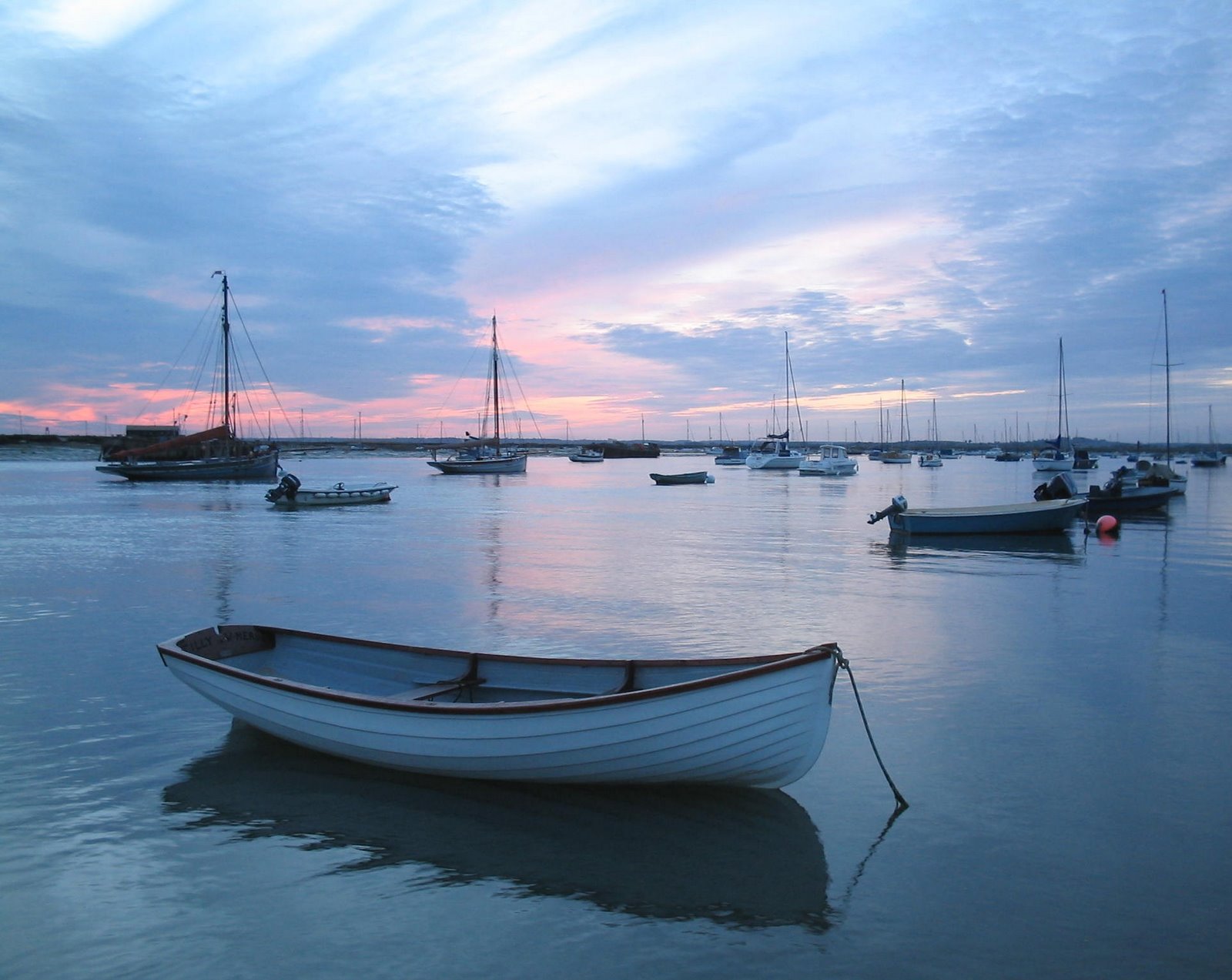
My trusty little camera finally gave up the ghost today. This has made me irrationally sad and wailey bordering on the weepy. I really loved it! My new mobile phone has far more megapixels and clever functions and so in theory takes much better pics, but it just isn't the same. I'm not awfully keen on gadgetry - I prefer things to be simple. Anyway, feeling rather naked (though actually quite decently attired), I skipped off down to the sea wall for a quick dog walk this evening before the Boy got back. And took these on my phone:
A big sloppy wet Mersea kiss!!
Now I'm off to bed with the wonderful Scones book, which is proving every bit as appetising as it sounds.
I'm a great devotee of the Shedworking blog - 'the only daily updated guide to the lifestyles of shedworkers and those who work in shedlike atmospheres' - although I've never actually worked in a shed (but I did play in some excellent ones as a child).
The nearest I've come to working in a 'shedlike atmosphere' is when I used to have a desk and PC in a [converted!] stable in the garden of my previous home. I adored working down there - especially after dark, for some reason. Something to do with the mental space created by the physical distance from family and domestic duties, I imagine. Now I'm back indoors again and it just isn't the same at all. So Shedworking is a little haven of dreams and inspirations. (I've even contributed a shedworking photo of my own, though not exactly of the rustic idyll variety.)
I've been editing books for (oops, can this be true?!) more than a quarter of a century now, but because I fell by accident into the non-fiction furrow, and for one reason of another have never ploughed myself across the other side of the field, the times when my work has impacted on my fiction reading habits have been rare indeed. But when it has happened, the effect has been notable.
For example, I've mentioned before that, had I not been familiar with the name of Alexander McCall Smith through my work on successive editions of the textbook on Medical Ethics which he co-authored, I might not so quickly have happened upon his No 1 Ladies Detective Agency books before they became big news in the UK. (And now he's one of the few writers for whose latest novel I will willingly queue at the bookshop door and gladly part with my hard-earned £££ for one of the first hardbacks off the press!.)
And now I have just finished reading a book which I'm sure I wouldn't have discovered, or purchased so eagerly, had it not featured in a fascinating article I copy-edited for a recent issue of the journal English Today. In '"Death of the mother tongue" - is English a glottophagic language in South Africa?', Rajend Mesthrie, Professor of Linguistics at the University of Cape Town, uses insights from Kopano Matlwa's novel Coconut to illustrate the viewpoints and dilemmas of the new young Black elite in South Africa.
The term coconut ('dark on the outside, white on the inside') is a term of disparagement used in South Africa to describe a Black person who has allegedly lost their culture, by becoming 'assimilated' into activities, education and occupations once associated with Whites, or by having mixed racial friendship groups:
'Coconuts, it is felt, have crossed over culturally and linguistically, since they speak with a White accent. It is also alleged that they have lost proficiency in their home language. The sociology of the new elites is a fascinating one which is still being explored by applied linguists, educationalist and sociolinguists.'
So what is it like to be a young, beautiful, aspirational, Black South African, highly educated yet cut adrift from the bedrock of native language and culture? This is the central theme of Coconut. Written by Kopano Matlwa when she was a 21-year-old medical student at the University of Cape Town, it is a quite remarkable literary debut, and little wonder that it scooped the European Union Literary Award for the best first novel in English by an African writer.
It actually reads more like two sequential novellas, loosely linked by setting and character (the two protagonists, Ofilwe and Fiks meet, briefly, in a restaurant where one is a customer and the other a waitress) as well as by general theme.
Ofilwe lives with her wealthy family in a security-guarded executive housing development. She is beautiful, clever, attends the best school in the area and is encouraged by her upwardly mobile parents to associated with White friends wherever possible. Yet despite having, superficially, every advantage in life, Ofilwe is neither happy nor contented. She finds herself living in a kind of cultural limbo. She speaks and acts White, yet of course she is not, but neither is she 'properly' Black, since her parents have deliberately cut themselves off from their own family roots, rituals and, most importantly perhaps, their native language. Ofilwe lives, ultimately, a soul-less, dysfunctional family life and her popularity at school is constantly tempered by an undercurrent of ingrained racism amongst her White contemporaries.
Fiks, by contrast, is poor and sees becoming 'White' as a way of leaving behind all that she regards as 'bad' about being Black. To be happy, for Fiks, is to be rich and to aspire to the Whiteness which, for her, represents the passport to material success. She has a difficult relationship with her employer and with her customers at the restaurant and her propensity for escaping into a self-deluding fantasy world is largely explained by her complicated, sexually abused, childhood, which emerges little by little as her narrative unfolds.
Strangely perhaps, and unlike the South African-based book I read immediately before it, Frankie and Stankie (an accidental but most illuminating juxtaposition), this is by no means a political novel - in fact it seems to have no 'agenda' at all. It simply states the case for these two particular girls. As Matlwa says at the end of the book, this is just 'our story, told in our own words as we feel it everyday'.
The writing is in turns lyrical and dreamy and brutally yet unselfpityingly frank. And it is no accident that it has been taken up by academic linguists - one learns as much about the characters from their use of the English language as we do from what they actually say. Kopano Matlwa has an acutely keen ear.
The girls' stories offer no solutions and point towards much sadness and disappointment yet this is not a bleak or hopeless book. I found it both compelling as a story and full of the kind of insights which perhaps only fiction can deliver. Highly recommended.
You can read an excerpt from the book here , and see Kopano Matlwa herself reading from her novel in the video below.
Eeeek! Too busy with work to post anything today, but have miraculously managed to find a few idle nanoseconds over coffee to visit a couple of other blogs and can heartily recommend the following:
A welcome retrospective of Quentin Blake's 'other' covers - ie not the children's books for which he is most famous - on the excellent Caustic Cover Critic (which is nothing like as angry-sounding as its name suggests!)
I've been following with interest the debate about female protagonists written by male authors on Petrona. The post and its fascinating comments relate mainly to crime fiction, but this is a terrific subject for wider discussion, I think. Are women better at writing convincing male characters than men are at creating female protagonists? If we cast the net wider and go back to Dickens, the Brontes, George Eliot, Hardy . . . what then? Is Tess of the d'Urbervilles a less convincing woman than Jane Eyre? Does it matter? Do we care?
I confess I've often considered that many contemporary women writers do get under the skin of their male characters in a way that most male writers don't quite manage with their 'leading ladies' (and I use that expression deliberately). But I'm aware that this view may be skewed by my own reading habits, gender-political leanings, academic studies . . . all kind of things, and not just by gut feeling. And of course there are some notable exceptions, some of whom are mentioned in the comments following Maxine's 'challenge'. I guess only a 'blind tasting' would really do the trick. An interesting excercise for a book group, perhaps.
Wish I had more time to think about this properly, but unfortunately my time is wholly consumed right now by a densely written typescript on the subject of the EU Markets in Financial Instruments Directive. Oh joy.
I can't sign off, however, without mentioning that I received a delightful email from a hitherto 'silent reader' of Musings - all the way from Prague, attaching a jpeg of a beautiful little watercolour of some sea glass. You can see some of Debara's paintings of sea glass and other 'finds' on her new blog here .
Have been wrestling with different coloured highlighter pens and a 600pp set of proofs (a textbook on Employment Law - oh joy of joys) for the best part of today. And now I am typing like fury into the night to capture the results of my fluorescent daubing.
It's all far too arcane and complicated to explain here, but I can tell you that it's so enthralling that I'm not even going to stop in order to write a proper blog post. No, I just can't wait to get back to it asap, and I thank my lucky stars that I worked hard and passed lots of exams at school and university because if I hadn't, well, I don't know where I'd be, but it certainly wouldn't be perched up here in the dizzy heights of the publishing world, colouring things in.
Oh how I must be envied by my peers - the ones with boring jobs with boring add-ons like . . . paid holidays and company cars and pensions. And who can blame them? They're probably reduced to putting their feet up and watching telly right now. Poor things.
Anyway, I have managed to wrench myself away from this delightful task on a few occasions during the day - principally to intervene in various noisy altercations between SDs #2 and#3, who have been enjoying the extra holiday provided by their striking teachers; but also to surf at lightning speed through the blogosphere, screeching round corners and bumping into things all over the place (part joy-ride, part guilt-trip).
Here are two that are well worth a read:
A characteristically perceptive piece by Danuta Kean (which has attracted some equally illuminating comments from writers and publishers) about the perils for unwary authors of entering into a relationship with a small publisher - written in the light of (though not specifically about) the disaster that was The Friday Project. Some insightful thoughts about the nature of blogging, too ('just a form of vanity publishing'), and the limited potential of the whole 'blog to book' ('blook') concept.
And Susan Hill on copyright and the Internet, 'are we the owners of our own work?' (vis-à-vis the J K Rowling court case in New York)
Ever fancied having a go at creating your own Jackson Pollock-style painting?
Well now you can.
At your desk, when you're supposed to be working!
Just click here, and then move your mouse around the blank 'canvas' a bit, clicking occasionally, speed up, slow down, a quick dash over to the other side and - voila!
Here's a clip that's been doing the rounds in freelance circles. I discovered it courtesy of the Wordsmith (thanks, Wordsmith), since when I have noticed it appearing all over the place on the blogs of others who work at the freelance coalface in the arts/media/publishing.
Whether you're an editor whose clients make their low budget your problem rather than theirs ('sorry, we can't pay you more than £[derisory sum x] to do this, so take it or leave it but if you leave it we'll sulk and you'll never get any work from us again'); or a photographer whose image is selected for publication in a large-circulation national newspaper/magazine ('sorry we don't actually pay for photos, but you'll get a credit'); or a journalist who's asked to research and write a piece for peanuts because if you don't, then someone whose only goal is seeing their name in print will do it for nothing instead; or an artist who's offered twenty quid for an illustration that's taken days to create; or indeed anyone struggling to earn a living through their art, whose creative talent is completely undervalued or taken for granted or assumed to be available for nothing by those who bask in the certainty of a regular pay-cheque (I'm just setting the tone here, you understand, and the tone is full-blown RANT!) . . .
. . . then you're not alone. And this is for you . . .
I am under fire. But I’m hanging on in there. Like this rose in my garden. Despite some extremely squally showers, and heavy rain overnight, it is still not in tatters. Not yet.
While performing some routine tasks in the last couple of days, I’ve been catching up on some Radio 4. Notably Frederic Raphael’s radio adaptation of his Fame and Fortune, which is being serialised in six parts. It’s very Raphaelite – stagey and self-conscious, with dialogue that’s as contrived as can be. But it works. There’s real truth in there. The students from The Glittering Prizes are middle-aged now. Aren’t we all. It’s engaging, it grips, it flows and I love it. I’m debating whether to read the book – I’ll have to have a dip in a bookshop before deciding. I rather suspect that, having listened to Tom Conti, Miranda Richardson, Harriet Walter, Nigel Havers et al, there will be little that the novel can add to this. But I may, of course, be entirely wrong. I often am.
Watched the third programme in the Genius of Photography series on BBC4 last night. This is a truly excellent series in every way – it goes that extra mile compared with so many TV documentaries. Riveting, intelligent and visually enlightening stuff from beginning to end. And knitting the whole lot together is the ideal narration by Dennis Lawson (which verges on the seductive, but maybe that’s just me),
Although, please, why don’t good actors ever query bad writing when they’re asked to read it? There was a less instead of a fewer and a mis-use of ‘comprised’. So routine these days that they don’t even register, I suppose. Except with people like me. Which is why I was so delighted to alight unexpectedly (as one does) upon this delicious blog the other day: my grammar could hit the target from that distance . It’s for People Who Care.
Worrying times out here on the East Coast. Many further north-east of here, in Suffolk and Norfolk, have woken this morning to the prospect of evacuation. The Muddy Island and its environs haven't yet featured in any of the flood warnings, but we're staying tuned for further news.
Cartoon by Dave Walker. I love this site: We Blog Cartoons You can re-use Dave's cartoons on your blog free and gratis. I shall be unable to resist posting some more from time to time.
Oh dear - it's been almost a whole week since my last post, and people have even been emailing me to ask if I'm OK!
I'm very touched by the concern - thank you - it makes blogland feel rather like the sort of neighbourhood where people start to make enquiries if you don't take the milk in one morning.
Actually, I'm absolutely fine, thanks - just quite monstrously busy with work, on top of which it was half term last week and there were men in replacing the central heating boiler and all the carefully planned sequential workflow has morphed somehow into one vast mountain of urgent work. A veritable Bass Rock of piled-up deadlines and I am deep in gannet guano.
I haven't even been walking the dog - the children have been doing that through the holidays - so no beach pics, either. I did manage to spend a couple of hours with friends at their beach hut on Friday, but forgot to take the camera, which was a shame because it was an invisible horizon day - the uniformly grey sea and sky merged into one another completely in the eerie stillness.
Normal service will be resumed shortly, but meanwhile, I'd just like to announce how very much I hate the 'word' anymore!
One comes across anymore in blogs and magazines all the time, of course, but I spotted it in a novel I'm reading and it leaped out at me so forcefully that I thought it was time I checked to see whether this is an unreasonable personal loathing, or whether (should I have been the book's copy editor, which I was not), I would have been perfectly 'correct' to split it into two words.
Don't worry. This isn't going to be a rant about what's correct and incorrect in English as She is Written. I take a professional interest in such matters, naturally, but I'm not one of those apoplectic grammarians I've mentioned before who spend their lives waging war against syntactical heresy of one kind or another.
I turned, as so often, to the incomparable http://www.askoxford.com/ , which allows one to dip into the Oxford English Corpus - the fullest, most accurate picture of the language today. Comprising some two billion words of real twenty-first century English, it provides the evidence of how language is used in real situations, and it is employed by lexicographers as a basis for writing accurate and meaningful dictionary entries. It includes all types of English, from literary novels and specialist journals to everyday newspapers and magazines and from Hansard to the language of chatrooms, emails and (crucially) blogs.
Here's what it has to say about anymore:
Some day or someday? A number of common words in English started out as two-word phrases and eventually became fused as single-word forms: forever, somebody, everyone. The Oxford English Corpus shows the process continuing today. The chart below gives some examples. For instance, it shows that the phrase some time now appears as the fused single-word form sometime in 32% of all occurrences in American English and 19% of all occurrences in British English.
The tendency to fuse fixed expressions is more common in American than British English. In American English someday has now become more or less standard, substantially outnumbering occurrences of some day; anymore and underway look set to follow. Although the same trend is apparent in British English, it tends to lag behind.
Does the corpus suggest any patterns in the fusing of expressions in single words? Fused forms almost always emerge first in informal English (the weblog and chatroom parts of corpus) and are much slower to spread to more formal, edited text such as newspapers and magazines; of the examples shown here, only someday is well represented across all text types.
Fused forms seem to spread more easily if there is a direct analogy with an existing word: anymore benefits from the analogy with anyone and anybody, whereas ofcourse is almost non-existent because there are no analogous of- words.
The tendency to fuse may be stronger when the phrase occurs at the end of a clause: 84% of instances of anymore occur at the end of a clause, compared with 46% of instances of any more.
(You'll need to click on the table to enlarge it sufficiently to read.)
So there we have it. Anymore is far more prevalent in American usage than in 'standard' English English - I think we all knew that. It will doubtless in my lifetime become universally accepted - and there's little I can do about that. And, logically, of course, if we can have anyone and anything, why not anymore? There is no logical argument against it whatever. It will happen. I'm not the copy editor of this book. It's not my concern. Why should I care?
Irrationally, I do care. It will take a lot to persuade me to like, use or endorse anymore in written English. Sorry!
Catastrophic result for England against South Africa in their first Rugby World Cup game tonight! And the only player with any charisma and that special bit of ooomph, the ever-brilliant Jason Robinson , is out of the tournament and possibly the game forever, with a hamstring injury. Well, I'm off too, after this disastrous performance from the - ahem - reigning champions [sic], and am going to support Scotland instead. Fickle? Moi? Oui. (But Hugo Southwell plays for Scotland, so I think I might be forgiven?) The rest of the family are turning to the land of their (great)grandfathers and pinning their hopes on Ireland.
Well, having partially drowned my sorrows with a couple of glasses of fairly (no, extremely) indifferent Sauvignon Blanc, I'm off to bed with Inspector Rebus - though with some trepidation (and I have very carefully avoided all reviews and spoilers, so please do not enlighten me).
Busy weekend ahead, with an endless round of children's sporting, educational and social activities, several kilos of blackberries to harvest, Small Doyle No 3's first day at the Rugby Club (under 6's squad) on Sunday (hard to believe if you've seen the bridesmaid pics, but she is tremendously keen, so we're off to buy some boots tomorrow), and the second half of the memoirs of a nineteenth-century Russian sea Captain to copy edit (jolly entertaining, actually, apart from the bits about whaling, which was de rigeur in those days, of course, but pretty hard to read from a twenty-first century perspective).
In addition to being asked, quite frequently, what copy editors and proofreaders DO, I am also asked what we are FOR. Who needs us? And why? Well, here are two examples which I noticed in quick succession.
First, I was on a frequently visited website which has Google ads running across the top and down the sides. Suddenly, up popped a giant ad, all on its own and taking up the space usually reserved for three smaller ads. Here’s what it said:
I shall not at this point humiliate the major ‘integrated web solutions’ consultancy (‘an official Google [sic] Analytics authorised consultant’, no less) who paid premium-rate charges for the privilege of allowing Google to publish this embarrassing gaffe worldwide, where it will have been seen and sniggered at by a zillion web users for several days. One of the services they offer is website design and optimisation, including answers to the question: ‘My conversions are poor - can you please audit my site to tell me what's going wrong?'
I rather suspect that their own ‘conversion’ on this ad will have been pretty dire. I dropped them a quick line over the weekend but have not yet received a reply. Quelle surprise.
Next, blogs. Now, OK, I’m new to all this and my posts undoubtedly leave much to be desired in every respect. But . . . I was reading a short 249-word one today, written by someone who has in the past taken me to task in a big way for being excessively picky and pedantic. Absolutely right: I am. Here’s why:
‘a string quartet who proceeded to play . . .’
Had I been asked to edit this (which I have not, so my being so bold will doubtless cause a burst of spluttering outrage), I would have changed this to:
‘a string quartet which played . . .’
Who refers to people, while which refers to groups, teams and things. So: 'Two members of the string quartet, who wept while playing . . . ' would be correct, because it is the individuals to whom one refers in this instance, not the entire group.
In the context, also, they didn’t ‘proceed to play’, they simply played. All the way through the event. ‘Proceeded to play’ implies that they started, or resumed after some interruption, yet in fact they were playing for ages. So here, ‘proceeded’ is an entirely redundant word. I could go on, but I don’t wish to be unduly tiresome. However, I would add that, if you are going to use the word ‘however’ twice in the space of two short, successive sentences (which is, however, not advisable), then I would suggest that, as in this sentence, the insertion of commas before and aft would look . . . 'nicer'. Not to put too fine a point on it.
(You will by now have concluded that the remark about proofreaders being not only pedantic but friendless, which I reported on yesterday’s blog, was not quite so unfounded as might have been supposed . . . )
So you see – we have our little uses in this life. We cannot claim, like surgeons, midwives or members of the armed forces, to deal in matters of life or death. But . . . we can save embarrassment, enhance the readability and meaning of the written word, and in some instances help to make texts do more justice to the intelligence of their creators. We’re specialists. Just as it’s often best to call in a gas engineer to sort out your central heating boiler (rather than to twiddle around inside it yourself with spanners, screwdrivers and lighted matches, etc), so is it sometimes prudent to call in a professional to tinker with your words, point out any possible infelicities and perhaps re-arrange what you say so that it more clearly reflects what you mean.
Here endeth today's lesson.
On a topic of far greater global import, namely the run-up to My Sister's Wedding (5 days and counting down): three more things ticked off the List.
I spent an interesting couple of hours earlier today surfing round various websites which offer us freelance publishing types an opportunity to advertise our services, link up with potential clients and do a bit of networking with our fellow wordsmiths. It was fascinating to see the range of websites through which editors and proofreaders offer their services to the world. Some are incredibly slick, snappy and seductive. Others look rather like one might suppose websites would have looked had they been around circa 1972 - brown/orange/red colour scheme, bad typography, unedifying content, uninspiring layout - just plan dull, frankly.
I have concluded that my site is probably somewhere in the middle. Which is at once both reassuring and vaguely alarming. It may not be glitzy, but with luck will not bore anyone to death. It receives a steadily increasing number of hits. And it brings in plenty of enquiries, so it must be serving its purpose.
And yet . . . who wants to be ‘middle’ anything? –aged? –of-the-road? -England? No thanks!
Except that by definition that’s exactly what the majority of us are (or is, if one is being quibbly over the singularity or plurality of ‘the majority’, which I suppose, in this game, one should be).
Having very nearly resolved, as a result of today's survey, to wrench my own website to tiny pieces and put it back together in a hip, cool and trendy fashion, I decided to take time out over a cup of tea and a (very small, I can assure you) portion of you-know-what, while listening to the Classic Serial on Radio 4. Which might be taken, I suppose, as proof beyond reasonable doubt of middle-just-about-everythingness.
Suffice to say, having mused on the matter for a little while, I concluded that I might as well leave the site as it is for the time being. After all, no single provider of publishing services is going to appeal to all potential clients, and it’s generally advisable to ‘be oneself’ rather than to cultivate an image, whether online or in person, which is likely, in the long run, to mislead.
One of the sites on which I have just listed my editorial ‘credentials’ describes proofreaders as ‘pedantic people with no friends’. Ha ha ha ha. Possibly not the ideal way to encourage potential advertisers – particular since it’s a pay-to-list site – but, yeah, well, we know what you mean, although some of us are really quite nice and friendly, actually, and haven’t worn an anorak since 1968.
Anyway, in the course of all this surfing around, I happened upon two particularly memorable sites, to which I’m sure I shall return on a frequent basis. The first is Hoopoe Prints - artist and printmaker Lisa Hooper’s beautifully presented site, in which her passion for landscape and the natural world shines through her work. Her mastery of a wide range of printmaking techniques, as well as painting, and her covetable handmade books are a delight to see.
Today’s other major discovery is dovegreyreader scribbles. I am probably the last bibliophile on earth to have discovered this, the ultimate reader’s blog. So forgive me for being behind the times and feel free to say 'like, duh, hello? you are soooo last year'. But it really is tremendous. You might not agree with all her verdicts, but you have to admit, dovegreyreader sure gets through a vast number of books in a month. And there are between-book vignettes on home, garden, craft-making, jam-making and Agas, too. What could be nicer?
I had a good-ish crop of blackberries in the garden myself, which I was planning to gather in and turn into delicious things to eat and drink. And then my son had a friend round to play. And they came in from the garden after some lengthy time, completely purple from tousled head to filthy toe. They had been having a battle. Naturally. The ammunition had been . . . blackberries. Why not? A handy and plentiful supply; spectacularly messy results – absolutely ideal for the purpose. Their bewilderment at the ensuing rant from the mad mother was so disarming that I nearly stopped mid-flow. But then thought better of it and continued unabated, from 'disgraceful waste of food', through 'purple footprints on kitchen floor', right up to 'get-those-clothes-off-straight-away-so-I-can-wash-them-or-the-stains-will-never-come-out'. I am going to have to search a little further afield for bramble bushes in the next week or two.
Just couldn't think of anything worth blogging about this last week. But then it's been a fearsomely busy week. Have barely had time to lift my head from my desk, let alone run the Dyson round the house, ankle-deep though the floors are with the usual unappealing melange of sand, glitter and cake crumbs. I suspect I have sent and received more emails this week than ever before in the history of my Outlook in/out boxes. (But this will remain a mere suspicion because I certainly don't have time to go and count them.)
Sometimes I am asked: ‘What does a freelance editor actually DO then?’ A question usually supplemented by a remark containing the word ‘just’. As in: ‘I suppose it’s mainly “just” checking spellings 'n’ stuff, isn’t it?’
Well, to give you an idea (and excuse myself for this round of blogger's block), in the last seven days I have wrestled with a textbook (and its somewhat problematical footnotes) on the legacy of Marxism on Contemporary International Law, and another on the History of Ecumenism in Wales. I have edited one law journal focusing on decision-making in Chinese courts and ‘living law’, and two journals on aspects of Welsh history and archaeology, one of which I am now also typesetting. I’ve researched and located the most up-to-date statistical data for the new editions of two student law textbooks. I’ve also found and inserted page references into the statutory tables for another student law book; proofread some web content for a training course for aspiring City traders; finished preparing a ‘text and materials’ book on Revenue Law for typesetting; commissioned some content for one of the looseleaf manuals I manage; started copy-editing a book on Managing Executive Health; and carried out some more preparatory work on my forthcoming David Britton website.
The school holidays are nearly over, however, so working life will return to what passes as ‘normal’ hereabouts – which is not saying very much. Merely that I will not be needing to intervene in so many pointless squabbles or have glitter (yes, glitter again – it is a ubiquitous element of life with a 5-year-old daughter) dropped in my keyboard or have to start planning lunch the moment breakfast is finally cleared away. On the other hand . . . there are an awful lot of name-tapes to be sewn into new uniform in the next two days. And finding of books and sports kit and sharpening of pencils and last-minute practising of musical instruments sadly left gathering dust (and no doubt glitter) over the past seven weeks. Ho hum.
On top of which, there’s the run up to the much anticipated Wedding in Sandhurst. I have been on my knees adjusting the hem of my elder daughter’s bridesmaid’s dress for days on end. She must either grow between-times or shrink, or slump sideways or something, because however hard I try, it never seems exactly straight and even. I am hoping, therefore, for a light breeze on the day, to create a bit of movement, and then my dressmaking deficiencies will not be so evident. Then there are haircuts (and highlights) and a trip to the zoo and an emergency dash into town for Draconian Pants (as my less-than-sylphlike female readers will understand), in order to make up for radical weight-loss plan not having quite, er, 'delivered' - owing partly to an unfortunate but understandable predilection for Maya Gold , and partly to having by no stretch of the imagination kept to my 'Training Programme' for next week’s Fun Run through Colchester’s Castle Park. I shall be running as part of the Colchester Rugby Club team. Which is such a laughably unlikely idea that it cannot possibly be true.
Delighted to see that long-term publishing colleague and friend, Julian Roskams of http://www.eticapress.com/ in Malvern, has joined the world of blogging. Welcome to blogspot, Julian!
Julian’s debut posting http://eticapress.blogspot.com/2007/08/publishing-revolution.html offers an interesting assessment of the self-publishing revolution – how self-publishing resources such as Lulu and ‘print-on-demand’ services have opened vast new horizons for people who wish to see their words and/or pictures in print without first having to be ‘accepted’ by a traditional publisher. At the same time – ironically, perhaps – it has also given publishing services providers like Julian (and me, of course!) the opportunity to work with all kinds of people with whom we would previously never have come into contact.
Helping individuals to knock their texts into shape before publication, offering advice on the design of their pages or covers, or simply holding out an experienced hand to guide those with little or no experience of the publishing process – this is an exciting new role for us. As I've mentioned in previous blogs, I'm a great fan of the whole photobook concept, and have a number of such projects in the pipeline. I’m also currently working on a number of non-fiction manuscripts for people who’ve contacted me via my website, http://www.julietdoyle.com/ , in search of self-publishing advice. And I know that assisting self-publishers is a rapidly expanding and successful aspect of Julian’s business too. Changing - but interesting - times.
. . . heavens! Have just this minute emerged, gasping with incredulity, from an innocent foray into some English Language websites. I lifted my head from a journal article on Enforced Consociationalism and Deeply Divided Societies [sic] in order reassure myself that I was (obviously) correct in altering the author's 'coup d'etats' to 'coups d'etat' - after a mere nanosecond of Googling, I found myself clinging desperately to the corroding rim of a seething vat of venom and vitriol, wherein pseudonymous combatants slugged it out to the bitter death in an excess of abusiveness. The Wikepedia archive on this thorny question is a good illustration: http://en.wikipedia.org/wiki/Wikipedia:Categories_for_deletion/Category:Coup_d .
And there was little old me with my quaint, outmoded reliance on etymology, thinking, 'well, it's a French expression and in French it would surely be coups d'etat, so let's go for that'. But nothing is so simple in the the world of Correct English Usage. Because we have Correct American English Usage to consider, and of course Correct International English Usage (and that term itself will, if you're not very careful, prise open another catering-sized can of turbulent worms - because nobody agrees on how, if at all, International English is to be defined: cue more anger and abuse).
Real people spend real time in their real lives working themselves into what seems to be the most genuinely stressed and hypertensive states about such issues. And I had always thought I cared about the English language rather more than a lot people. Clearly not as much as some. Thank goodness. It's almost enough to make one shout 'Oi! Get a Life!'.
Actually, it's more than enough, so I will. 'Oi! Get a Life!'
For a restrained, calmly elegant and authoritative reference on the derivation of words in common English use, it would be hard to find anything to better http://www.etymonline.com/index. (Not that it sheds any light on coup d'etats, however, but, luckily that doesn't matter, because I know I'm right. It should be coups d'etat.)