Showing posts with label books. Show all posts

Wednesday, 20 January 2010

Leafy


Over the last couple of years I've noticed on my Statcounter that a lot of visitors to Musings have landed here as a result of searching for Mersea artist Leafy Dumas, whose lovely cards and other artwork I've featured from time to time (see, eg, here, here and here).


Well now - hurrah! - Leafy has recently launched herself into the blogosphere with Leafy's Art Blog.

One of Leafy's recent projects has been illustrating a picture book for children, The Christmas Seal, written by fellow islander, Veronique Eckstein. You can view some pages from the book and read lots more about it on the Mersea Island Tales website .

Saturday, 28 February 2009

What a difference a generation makes . . .


Update on the Literary Biblical References quiz.

With scores of between 6 and 10 from those who responded (to whom many thanks for taking the trouble and for some interesting comments), I thought it would be more pertinent to Andrew Motion's fears to consult members of the current generation of students. So I asked my 15-year-old daughter to give it a whirl.

She has revealed her score in the comments to the original post .

Hmmm. Beginning to see what you mean, Mr M!

I've asked SD#1 to get her friends to have a go and let me know how they fared.

Meanwhile, further scores and comments from anyone - of any age or religious persuasion - will be most welcome.

How much is our enjoyment and understanding of fiction, poetry and drama enhanced by our ability to pick up biblical allusions and references? And how much diminished if they simply go unnoticed? Is The Bible in (or as) Literature something that should be actively taught as part of the English curriculum in schools and on English degree courses (see Logophile's comment on the original post)? And if not, then is this a vital chunk of our cultural heritage which is going to be lost forever (and apparently pretty quickly so)?

And, all you writers out there: is the Bible still mined for literary purposes? Have you ever deliberately or unconsciously used biblical metaphors, allusions or references in your work, or plundered the Bible in other ways (eg for the titles of novels)?

Tuesday, 17 February 2009

Is the writing on the wall for English students?


Andrew Motion is worried that students of English literature are are not familiar with the Biblical references which inform so much of the canon of English poetry, prose and drama. And, indeed, still forms a rich source of inspiration for the titles of contemporary books and plays.

I must say, I tend to agree with our Poet Laureate. Though, equally, I freely confess that I didn't score 10 out of 10 in this quiz . . .

If you tell me your score, I'll tell you mine!

Monday, 8 December 2008

The joy of soup


It's well and truly December. And I'm pining rather badly for something to which I'd become deeply attached: the New Covent Garden Food Co's November Soup of the Month, now sadly no longer available. I do wish I'd stockpiled. And I do hope they resurrect it as part of their standard range.

What was so special about November's Soup of the Month? It was Chilli Bean and Chocolate. Yes, chocolate!

Chocolate Soup. Was ever there a more perfect combination in the history of comfort eating?

The use of chocolate in savoury dishes still seems rather strange in the UK, although it's a workaday combination in Latin American countries. Speaking of which, if you haven't read Laura Esquivel's magical Mexican novel and/or seen the film Like Water for Chocolate, then you've missed an unforgettably sensual feast of food, passion and . . . chocolate.


The chilli/chocolate combo is also divinely available in Montezuma chocolate bar form. Taste it, think 'hmm, nice choc, but I wonder where the chillis have got to', and then, moments later - kerpow! Amazing stuff. And addictive. For some reason the Mersea Co-op stopped stocking it about a year ago, so now I have to travel off the island to get my fix, and I haven't had one of those for ages. It's about time I did.


Anyway, I am digressing from souply matters. On special offer at Tescos for a pound a carton, Chilli Bean and Chocolate became my almost daily lunchtime treat. And I miss it rather terribly.

Luckily, there are vast, soupy oceans of discovery out there which are almost as nice though not necessarily involving chocolate (which some might consider a huge point in their favour).


As the weather worsens and the days grow shorter, I find myself with soup increasingly on my mind (as well as dribbled across my workstation on occasion), and am often to be seen rummaging in fridges and cupboards, looking for that vital missing ingredient which will turn the contents of my bubbling cauldron miraculously from, for example, very runny mashed potato with aimlessly floating bits of leek, into Pure Culinary Magic.

Sometimes it happens. Sometimes, unfortunately, it doesn't quite get there. But it matters not, because although I have plenty of real recipes in real recipe books on my kitchen shelves, I do believe that the very best soup in the world is the kind which arises spontaneously, via some mysterious alchemy, from random leftovers and surplus vegetables, seasoned with much grinding of pepper mills, intemperate crushing of garlic and inventive combining of available herbs. The occasional misfiring might deter my long-suffering family, but it does not deter me!


Yesterday, it was potato, onion, leek and a suggestion of parsnip, with smoked bacon and rosemary. Quite usefully warming post-rugby fare for a frosty day, and a resounding success with three out of four soup-eaters who expressed a preference. (And since the fourth is notorious for not liking anything that isn't coco-pops, fruit pastilles or spiral pasta with pesto, her gastronomic opinion is rarely given credence.)


December's Soup of the Month from NCGSC, incidentally, is Chicken, Vegetable and Pearl Barley a charity fundraiser for the Salvation Army’s Resettlement Centre programme.

From Heinz Cream of Tomato to pheasant with sweet potato and juniper berries, I am heartily convinced that there's a soup to cure most of life's ills (with the notable exception of Jerusalem artichoke, which gave me the worst stomach ache I have ever, ever endured). And that's not only true on Planet Earth, either . . .

'He's had a Very Hard Day. What he needs is a Mug of Soup!'


Tuesday, 28 October 2008

Imagine This - a book to talk about


Congratulations to Sade Adeniran, author of Imagine This, which I read and reviewed here earlier this year. Her debut novel has recently been longlisted for the 2009 World Book Day 'Books to Talk About' competition . It certainly deserves to get through to the shortlist, in my view - a highly original and compelling story.


The Books to Talk About list features 50 great looking novels - I only wish my TBR pile wasn't already so catastrophically high, or I'd be adding to it without delay!

Tuesday, 7 October 2008

In praise of Granta

Granta magazine. It's just plain brilliant. And I'm a devotee. A fan. An adoring long-time admirer.

And 'magazine' is what it persists in calling itself, although that is not the word which springs to mind when one holds one of its book-shaped, book-sized, book-weight issues in one's eager hands.

As revealed by the photo above, a little group of older Grantas has even, by some miracle, ended up side by side on the disorganised shelves in Musings Mansions. This is purely accidental and not by design, as those familiar with my 'library' in real life will testify.

Here's how Granta is described on its 'about' page:

'Since 1979, the year of its rebirth, Granta has published many of the world’s finest writers tackling some of the world’s most important subjects, from intimate human experiences to the large public and political events that have shaped our lives. Its contributors have included Martin Amis, Julian Barnes, Saul Bellow, Peter Carey, Raymond Carver, Angela Carter, Bruce Chatwin, James Fenton, Richard Ford, Martha Gellhorn, Nadine Gordimer, Milan Kundera, Doris Lessing, Ian McEwan, Gabriel Garcia Marquez, Jayne Anne Phillips, Salman Rushdie, George Steiner, Graham Swift, Paul Theroux, Edmund White, Jeanette Winterson, Tobias Wolff. Every issue since 1979 is still in print. In the pages of Granta, readers met for the first time the narrative prose of writers such as Bill Bryson, Romesh Gunesekera, Blake Morrison, Arundhati Roy and Zadie Smith; and have encountered events and topics as diverse as the fall of Saigon, the mythology of the Titanic, adultery, psychotherapy and Chinese cricket fighting.

Granta does not have a political or literary manifesto, but it does have a belief in the power and urgency of the story, both in fiction and non-fiction, and the story’s supreme ability to describe, illuminate and make real. As the Observer wrote of Granta: ‘In its blend of memoirs and photojournalism, and in its championing of contemporary realist fiction, Granta has its face pressed firmly against the window, determined to witness the world.’

'A belief in the power and urgency of the story' absolutely sums up what makes Granta so exciting and so necessary. The current issue, No 103, is entitled The Rise of the British Jihad and contains not only the eponymous investigation by Richard Watson but a remarkable selection of other writing and photographs. Perfect train-reading stuff (and I have some nice long railway journeys coming up soon - hooray!).

And as if it weren't enough that one can buy and own and keep these hugely desirable, re-readable publications in the time-honoured way, there is also now, of course, Granta.com. A beautifully clean, clear, no-frills website which is a joy to meander around. There are highlights from each issue to be had for free and the Online-Only features include What We're Reading and Photography.

You can sign up for a monthly newsletter here.


And for anyone interested in book cover design, this slideshow of 30 Years of Granta Covers will keep you glued to your screen, going 'ooh, that's a good one', 'ooh, that's another good one', 'ooh, that one's excellent' for really quite a long time. Especially if you start at the beginning again once it's finished. Which is what I'd recommend.

Saturday, 4 October 2008

TBTM

Walked from West to East Mersea and back again along the beach for four bracing, blustery hours this morning and early afternoon. Boy and I enjoyed an early sandwich lunch at Fen Farm, from where we took turns watching yachts through a telescope, picked up his mountain bike and set off for the return trek, facing into an ever more biting wind.

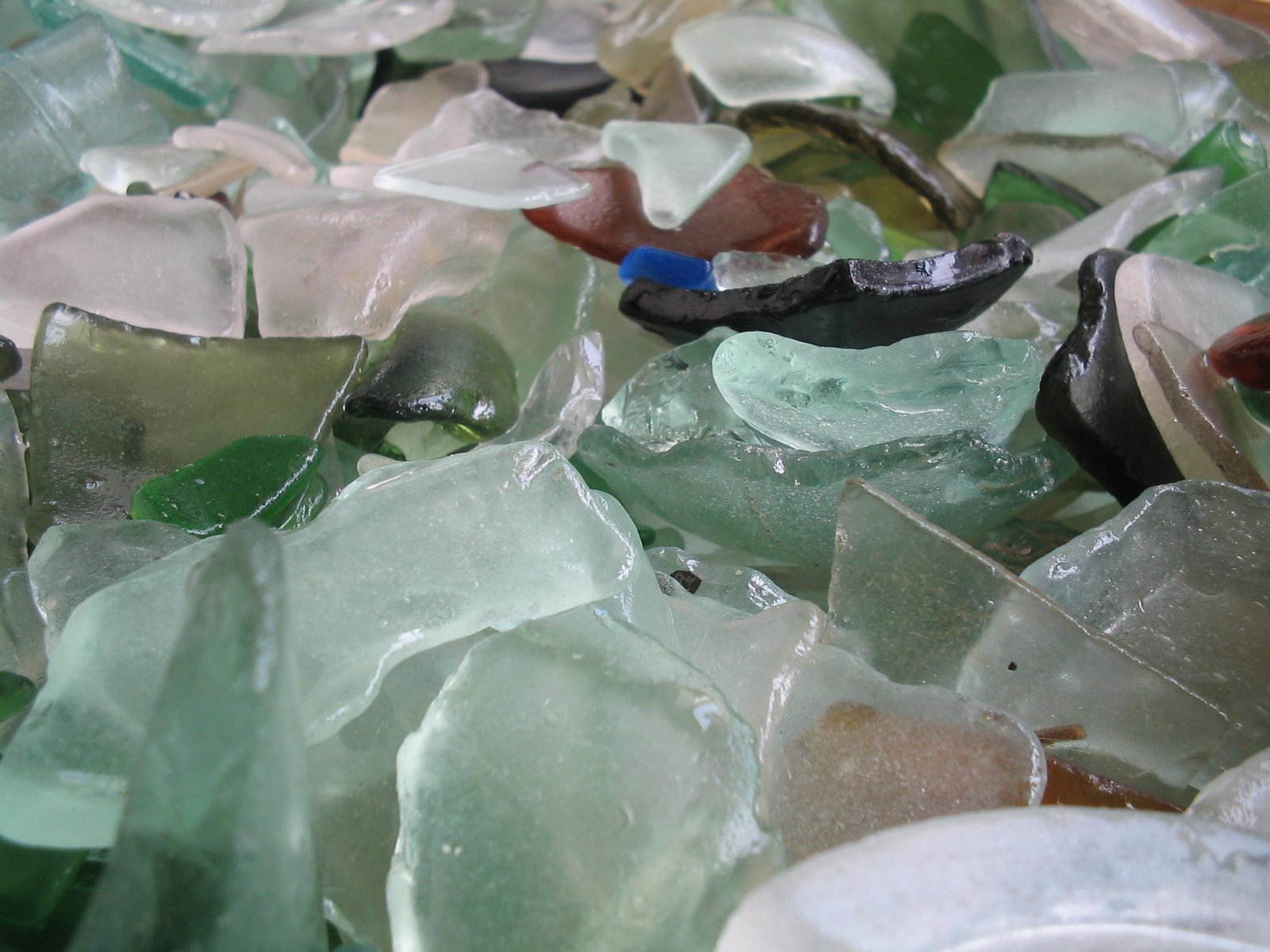
The kite-surfers were having the time of their lives and we had a spectacular view of their extraordinary feats from the sea wall. Head bent against the elements, I picked a decent crop of sea glass without really trying.

Boy cycled inland to meet his friends halfway back, so the dog and I ended our little expedition together, sitting on my favourite old jetty with a nice hot cup of takeaway tea.

It's turned very cold indeed now. Windy, damp and grey, and night will fall early. Boy and his dad are off out again for an evening of motor launch driving duties at the Packing Shed, so it falls to me to make a hearty supper to warm everyone up. Shepherd's pie and blackberry crumble should do the trick, I think.


And then I shall be eschewing the family telly viewing and curling up with a book instead. My reading took a real nosedive over the summer. Too many distractions, I suppose. But I've suddenly got going again - am finishing off some part-read novels I abandoned (though no fault of theirs, I hasten to add) back in August, and have eagerly lined up some others from the top of the TBR pile for imminent consumption.

Whether I shall write about them here is something I've yet to decide. I found myself, a few months ago, becoming so terminally bored by the sight of my own inconsequential ramblings about books, and so completely weary of reading other people's book reviews too, that I just gave up on the whole book-blogging world. And, slightly to my surprise, I find I don't really miss it one tiny little bit! I shall probably creep back in by the back door as the days shorten and there are more hours to spend hunched over a laptop, but it will be a very gradual process, I suspect.

Friday, 3 October 2008

Friday Interview - Craig Conley on magic words

Today's Friday Interviewee is Craig Conley, whose Magic Words: A Dictionary is published in paperback this week.


I first encountered Craig earlier this year, through this guest post on the inspirational ColourLovers blog. I mentioned on Musings at the time how delighted I was to land on Craig's own site and discover, for example, his book of annotated ellipses (which you can read online) and his 'unconventional' guide to the mysteries of Portmeirion.

Described by
Encarta as 'America’s most creative and diligent scholar of letters, words and punctuation', Craig has also been called a 'cult hero' by Publisher’s Weekly. A former college teacher of writing and literature, he left academia to pursue his research into one-letter words, magic words and ancient Zen versions of Rock-Paper-Scissors. In addition to Magic Words: A Dictionary and One-Letter Words: A Dictionary, he has written a field guide to identifying unicorns by sound, a coloring book that requires no crayons, an atlas of blank maps, and four editions of the textbook Human Diversity: A Guide for Understanding. Craig is also a regular contributor to Pentacle Magazine.


Craig, your dictionary of one-letter words is a revelation. How did it all start?

Who knows why, but I have an eye for anomalies in text. A solitary letter of the alphabet in the middle of a sentence is like a blip on the radar of my vision. I can't help but focus my attention on such anomalies and wonder 'what's their story?' Over the course of several years and through the use of profuse bookmarks and scribbled notes, I found myself with enough one-letter words for an entire dictionary.

My eye for textual aberrations also led to my compilations of all-consonant and all-vowel words, as well as magic words.

One of my favorite one-letter words has to be X, which boasts nearly 60 definitions of its own. X marks the spot on a pirate’s map where treasure is buried. It’s a hobo symbol meaning handouts are available. X tells you where to sign your name on a contract, and it’s also an illiterate person’s signature. X indicates a choice on a voting ballot, and a cross stitch of thread. Mysterious people may be named Madame X, and the archetype of a mad scientist is Dr. X. X is an incorrect answer on a test, and it’s a rating for an adult movie. X is a power of magnification, an axis on a graph, and a female chromosome. It is a multiplication operator, a letter of the alphabet, and an arbitrary point in time. X is a kiss at the end of a love letter.

Another favorite letter is O, which Shakespeare used to describe stars ('All yon fiery Oes' in A Midsummer Night's Dream), the earth ('The little O, the earth' in Antony and Cleopatra), and an affliction ('Why should you call into so deep an O?' in Romeo and Juliet). All those X's and O's led me to wonder whether every game of Tic Tac Toe told a story! I even worked up a 'Tic Tac Toe Story Generator' so that players can share their tales.


So how did you go from writing a dictionary of one-letter words to a dictionary of magic words?

In retrospect, it was actually a natural progression. The letters of the alphabet are like the building blocks of language, and magic words are like the blueprints or ‘mission statements’ for constructing reality. In the course of gathering together one thousand different meanings for the letters of the alphabet, I saw over and over again how letters are inseparable from mysticism in cultures all around the world. Mythologies tell of the alphabet's divine origin and how deities used language to speak the world into existence. So my dictionary of one-letter words would actually qualify as a collection of magic words (albeit very small ones!). As an amateur magician and scholar of magic, I've come across thousands of references to magic words over the years, and that no doubt sparked the idea to celebrate and codify the lexicon. But my main inspiration is literature itself - the power of carefully chosen words and carefully constructed sentences to transport a reader into other worlds, other times, even other lives.


What exactly qualifies a word as ‘magic’?

‘Magic’ refers to a state of consciousness - an awareness of mysterious possibilities in humanity and the universe at large. I once had a friend who said he believed only what he could see and touch, and I was dumbfounded! What a tiny reality he created for himself! Ironically, my friend was a meteorologist, and one would think that of all professions, meteorology would foster an appreciation for the unpredictable! The problem, of course, is that magic is commonly associated with superstition. But as the physicist B K Ridley eloquently explains:

‘what is not scientific is not necessarily superstition. Forces that move people exist which lie outside the scientific domain by their very nature — everyday forces, neither supernatural nor occult, plain to everybody, part of the human experience. Even our everyday language employs the image of the mechanical effect of a force when we speak of being moved by a certain purely mental experience. Who does not respond to the power of form, of colour, of symbols, and is this not what used to be called talismanic magic? Who is not delighted and moved by the artful use of words, incantations, names as essences, oratory, poetry, and is this not word magic? Is not the effect of harmony and melody magic? And is there not an elemental magic in the intuition of the craftsman, even in the 'feel' of the technician for his machine, though it be a product of the highest technology? To say nothing of common sense? Surely the answer to all these questions is yes. Then these are nothing but the well-known elements of natural magic stripped of their superstitious and supernatural patina. Magic, thus defined, is the complement of science. It acts, not on material objects, but on human sensibility. At its highest intellectual development, reached in the seventeenth century just when science was beginning, magical theory could describe a cosmos full of meaning to the human spirit, a latter day Theory of Everything.’ (On Science, 2001).

Our most potent magic words are microcosms that reverberate with echoes of the campfire storyteller's mythology. Magic words have been called fugitives from dreams and fairy tales. They are mysterious, shadowy, and perhaps indecipherable, yet their cadence possesses an unmistakable profundity. We know the phenomenon in great poetry, where we might be deeply struck by language we don't fully comprehend. With magic words, we define a sacred arena where miracles can come into play. There are profound truths in that old cliché of a magician pulling a rabbit out of an empty hat with the magic word ‘abracadabra’. Almost everyone recognizes the image. But what relatively few people know is that our stereotypical magician is speaking an ancient Hebrew phrase that means ‘I will create with words’. He is making something out of nothing, echoing that famous line from Genesis: ‘Let there be light, and there was light.’


Can any word be a magic word?

Yes. Here's why: Language has the power to reawaken vestiges of humankind’s earliest communication — our ancient ancestors’ savage cries of anger or love. All such cries were commands; to the primitive mind the command was inseparable from the act, much in the way that a small child learns to conjure up a parent from the unseen void of an adjoining room, simply by employing a magic word like ‘Mama’.

A great many ‘commonplace’ words come standard with a special spark of their own. Literature, folklore, and even advertising are replete with examples of commonplace words that are rich with magical connotations. ‘Paris’ conjures romance. The old name for China, ‘Cathay’, recalls an exotic, faraway land of spices and silks. ‘Riviera’ bespeaks elegance and excitement. The word ‘holiday’ whisks us away to a private paradise. The word ‘now’, spoken with a commanding voice, awakens one's inner six-year-old child who instinctively obeys a parental command.

Hoagy Carmichael worked highly musical, magically evocative words into his lyrics so as to transmit memory and yearning for the simplicities of yesterday: ‘moonlight’, ‘Wabash’, ‘sycamore’, ‘possum’, ‘oleander’, ‘rhubarb’, ‘veranda’, ‘buttermilk’, ‘old mill’ and ‘watermelon’, for example.

If intoned in the proper spirit, any word can be a magic word. However, the most powerful magic words are ancient-sounding. They project an aura of tradition, of ‘old wisdom’ handed down through the generations. Their mysteriousness addresses our instinctive understanding that words are powerful, creative forces.


How can one find one's own magic words?

It all depends on what kind of magician one is. We're all magicians, for the magician archetype is a primal aspect of the human psyche. In my dictionary I explain how there are four basic types of magicians:

Trickster, Sorcerer, Oracle, and Sage. One good way to determine your type is to think about how you'd organize a friend's birthday party.

A trickster type is mischievous and would be inclined to throw a surprise party or a hire a novelty singing telegram. ‘I can't believe you did this’ would be a typical reaction. The trickster's magic words are likely to be funny-sounding tongue-twisters or irreverent wordplays.

A sorcerer type likes to make huge impressions with grand gestures, such as arranging a lavish, elegant dinner party. ‘I'm speechless’ would be a typical reaction. The sorcerer's magic words are likely to be weighty and mysterious syllables from Egyptian and European wizards of old.

An oracle type would take a psychological approach and snoop out the ultimate gift as if through mind-reading. ‘How on earth did you know I wanted this?’ would be a typical reaction. An oracle's magic words would be friendly, familiar words like ‘vacation’ that cause us to spirit off to a fantasy world.

A sage type would take a philosophical approach and act as a wise one or guide to give a friend symbolic wings; the birthday would be an ordinary day made extraordinary by awakening the inner child to see with eyes of wonder. ‘Only you could have made today so special’ would be a typical reaction. The sage's magic words are likely to be mystic chants of Judaism's Kabbalists, Islam's Sufis, Christianity's Gnostics, Buddhism's Lamas, and Hinduism's Gurus.


What is the most unusual magic word you found?

There are so many unusual ones! One favorite is a summoning spell from ancient Egypt. ‘Abba Abba Abba Ablanatha Nafla Akrama Chamari Ely Temach Achoocha’. The Aramaic word ‘Abba’ beseeches a primordial father figure. ‘Ablanathanalba’ refers to a griffin (eagle's head, lion's body) who protects a sacred shrine. ‘Akrammachamari’ is a word found on Egyptian amulets to ward off evil. The spell conjures the divine power of God's tattoos. On the original Coptic manuscript is a rather exotic image showing the seven holy vowels of the Greek alphabet tattooed across the divine's chest!


What's your favorite magic word?

Again, there are so many! One favorite comes from one of the Oz books by L. Frank Baum, entitled The Magic of Oz, written in 1919. It's a word discovered by a munchkin that can transform anything into anything else - if you pronounce it correctly. It's a wild word, full of unlikely letters like x, q, z, y, g. I'm disinclined to talk about it, lest I unleash the mischief that the munchkin warns against! But for those curious, it's the final entry in the P section of my dictionary.


Thanks Craig.

You can read more of Craig's magical investigations on his Magic Words blog and Magician's Hidden Library site.

And for a joyful daily dose of word-related wisdom, wit and whimsy, do visit his excellent Abecedarian blog.

Thursday, 2 October 2008

Sorted Book Challenge III

Here's this lunchtime's offering:

See links to some other new ones in the comments to the original post.

And do please join in.

(G'wan, g'wan, you know you want to!)

Sorted Book Challenge II

This one's less of a story and more of a Muddy Island Tourist Office blurb:


(If you're wondering what on earth this is all about, see my previous post on the Sorted Book Challenge.)

Wednesday, 1 October 2008

The Musings Sorted Book Challenge

I am indebted - as I am so often - to Susan at Green Chair Press for this link to the official Sorted Books Project.

'The Sorted Books project began in 1993 years ago and is ongoing. The project has taken place in many different places over the years, ranging form private homes to specialized public book collections. The process is the same in every case: culling through a collection of books, pulling particular titles, and eventually grouping the books into clusters so that the titles can be read in sequence, from top to bottom. The final results are shown either as photographs of the book clusters or as the actual stacks themselves, shown on the shelves of the library they were drawn from. Taken as a whole, the clusters from each sorting aim to examine that particular library's focus, idiosyncrasies, and inconsistencies — a cross-section of that library's holdings. At present, the Sorted Books project comprises more than 130 book clusters.'

When you click on the photos on Nina Katchadourian's site, you will see the rest of the series from each 'sorting'.


And here is a not terrifically amusing one I've just come up with very quickly myself. I will put my mind to creating some better efforts this evening (because, with absolutely no cleaning, tidying, washing or ironing to do [cough, cough, cough], let alone manuscripts to be edited [further bout of ironic ahem-ing] of course I have just masses of time on my hands for playing amusing bookish games).


Why don't you see what your bookshelves can yield? If you post pics of the results on your blog, please leave a comment with link(s) below, and, if enough people join in, I'll put together a compilation of the best 'stories' here in a few weeks' time.

And we'll have a vote.

And I'll send a prize to the winner!

Yeah! Get to it!

Monday, 15 September 2008

Alexander McCall Smith - Corduroy Mansions


I confess that the Daily Telegraph is not a publication which often crosses the threshold of Musings Towers, but it is eagerly being granted electronic ingress for the foreseeable, owing to the daily publication online of the latest serialised novel by Alexander McCall Smith. Replacing the temporarily suspended Scotland Street series, Corduroy Mansions will appear every week day for 20 weeks, starting today. It is also available as a podcast, read by Andrew Sachs.

Corduroy Mansions is an unassuming large house in London's Pimlico, inhabited by an assortment of characters and one dog, writes Alexander McCall Smith. The date of the building is indeterminate, but there are Arts and Craft features that point to the very late nineteenth century. It is believed to have been built as an asylum, or possibly a school, or a mansion block. In fact, nothing is known about the building's history, although it does feature in a guide to the architecture of Pimlico. It is described there as "a building of no interest whatsoever". The nickname Corduroy Mansions was given in jest by a fashionable person, and stuck.

To read online or by email and to download the podcasts, simply subscribe here.

Thursday, 11 September 2008

Sea Change - the voyage

Addendum to previous post on Sea Change: The Summer Voyage from East to West Scotland of the "Anassa", by Mairi Hedderwick: I completely forgot to include this essential and most attractive map, showing the route taken by Mairi and her Captain (click to enlarge):


I do so love hand-drawn maps.
Off to Scotland again myself soon. Hurrah!

Wednesday, 3 September 2008

Phew!

I love them infinitely dearly of course - but goodness, how lovely it is today now that all three children are safely back at school!

I know exactly how many solid, uninterrupted hours' work I can do before I hear their [darling little] voices again. And that feels good. Concentration will once again simply happen, rather than requiring effort and being overlaid by guilt.

And, once I've successfully achieved my clear day's-worth of work, this is what awaits me:

No, it's not my TBR pile, it's my TBB (to be blogged) pile. Books I've read which are well worth Musing about, but I didn't have (or make) time over the summer hols to do so. I simply can't decide where to start, so all suggestions welcome!
(Bad pic, sorry - I stacked them on my scanner, which protested about the weight and performed extremely badly to prove the point.)


Tuesday, 2 September 2008

Wot else I did at the weekend (and a confession)

One of the very best things about my little weekend holiday was that (in spite of the inevitable distractions of inter-sibling squabbling and bickering) I had, at long last (these having been particularly busy and distracting school holidays for some reason) a chance to read . . .

and read . . .


and read . . .
and read . . .
You’ll have noticed that the book I’ve selected to break what’s turned out to be a bit of a reading fast, is Emma Darwin’s enthralling The Mathematics of Love.


And here's evidence of the awful truth: I’m a Spine Bender!

Shocking, I know. I’m not proud of it.

And I’ll quite understand if you hate me now.

Wednesday, 30 July 2008

Another little rant about book cover design

How very interesting to read Diane Shipley on 'The great chick lit cover-up' on yesterday's Guardian Book Blog. Particularly given its special mention of Rosy Thornton's wonderful Hearts and Minds, the book which has recently had me spitting about publishers' misguided rush to jump on the 'chick-lit' bandwagon, regardless of whether the books thus branded are actually 'chick lit' at all.

Shipley's piece is so spot-on that I hope she doesn't mind if I quote from it at some length:

'When we look at a book, its cover tells us what to expect. A pink paperback featuring a smiling young woman is most likely a female-centric summer read, whereas a gun on a black background is probably a murder story. A few simple aesthetic rules narrow our options, make life easier and ensure none of us has to wander Waterstone's for hours, wailing in confusion. And yet the rules seem to be changing.

Having cottoned on to the fact that chick lit books sell like cupcakes, publishers are now adding chick lit-style covers to any book written by a woman whether it fits the genre definition or not.

Fay Weldon has spoken out against the use of chick lit branding on her books as she feels it's misleading to readers. And I've talked to several authors of contemporary fiction who hate the way their books have been similarly marketed: one pleaded with her publisher to change her covers, to no avail.

Instead, books aimed at women are becoming increasingly homogenised, girly and bland-looking.

Rosy Thornton's Hearts and Minds has been described as a book which "tackles some very pertinent contemporary issues in education as well as [a] tangle of moral dilemmas" in a large scale, 19th century-style drama. It sounds positively Dickensian, and yet it would be hard to find a book
that looked more like a light romantic comedy. '

To read the full article, click here:


Rosy Thornton herself, in a post on Vulpes Libris, said (slightly tongue in cheek, but, given the awful, misleading cover her publishers have imposed on her own novel, perhaps only very slightly so!):

'Cover design is the enemy of the level playing field: the insidious perpetuator of stereotypical assumptions. Look at that figure-in-a-landscape in oils: Literature. Look at that soft focus photograph of a child’s feet: Fiction. In my brave new world (Aldous Huxley: Literature) all publishers would be obliged to turn out novels in plain brown covers, bearing only the title and the author’s name – rather like those lovely old orange Penguin paperbacks which filled my parents’ bookshelves.'


Ahh, yes, the old Penguin paperbacks - has anything ever touched their perfect, democratising design? I very much doubt it. And how we loved the celebratory re-issues. And how we rushed to buy (or at least rushed to add to our wish lists) all the gorgeous must-have Penguin merchandise.


Why? Because they are timeless and beautiful and they say nothing about the book inside except that it's damned well worth reading. For itself. By readers.

Plain, simple, truthful covers.


The same could be said of Persephone books , which have an army of adoring fans and collectors, who delight in the books' understated, uniform, ultra-cool and tasteful covers.

Book covers matter hugely. We do judge books by their covers. Maybe we shouldn't, but we do. As this recent report pointed out. And here's a blog review I landed on the other day which couldn't have illustrated this more clearly.

Readers of good, thoughtful fiction appreciate good, thoughtful covers on their books. And they don't take kindly to being patronised or manipulated by publishers and their design and marketing departments.


Long-time visitors to Musings will be used to my rants about covers ever since I reviewed this book and mentioned (right at the end of the review) how very much I hated its deeply ghastly cover (for the same kind of reasons I hated the cover of Hearts and Minds - ie it entirely belies the nature of the novel and does a huge disservice both to the author and to potential buyers). The whole issue has become a frequent and long-running topic on the author's blog which is all very amusing but it's also a deadly serious point for a 'mid-list' author for whom every single sale counts.

Ah well, I must climb down from my hobbyhorse and try to relax because I've a very busy day ahead of me tomorrow.

But . . . before I go, I absolutely must add that one of the very best blogs I've discovered in recent months is Caustic Cover Critic (subtitled 'one man's endless ranting about book design'). Though he can be pretty caustic about lazy, sloppy or just plain bad book covers, the Caustic Critic actually offers a constant flow of fascinating posts about the art and design of books. Always full of insight, not just about the covers but the contents of the books as well - because he is fabulously well read and an erudite literary critic as well as a design historian.

If you haven't already discovered this blog (and for all I know, I may be so out of touch that I'm the last person on earth to have done so), for a sample of what this guy is about, I'd recommend this one and this one.