Saturday, 19 January 2008

Less Eminent Victorians

Here's a curiosity from my chaotic bookshelves which might amuse. Less Eminent Victorians by 'R. D.' (Randolph Davies), published in 1927, pokes fun at the Victorian era in a series of limericks, based around wood engravings from popular periodicals of the time - The Leisure Hour and The Quiver among them., and also from a book called Mary Price: The Memoirs of a Servant Maid.

R. D., who chose his title in mischievous homage to Lytton Strachey's Eminent Victorians, says in his introductory Note:

'On or two of [the wood engravings] have been selected purely for their badness; but for the most part it is their very excellence as artistic and dramatic illustration that temps one to exploit their Victorian habit and gesture for less serious purposes than those for which they were designed.'

Here are couple to be going on with (click to enlarge). I'll post some more on days when I'm devoid of blogging inspiration*.

*'Blogspiration'?
Hmm, perhaps not - sounds more like an unfortunate side-effect of over-enthusiastic blogging rather than the reverse. An application of Antipostpirant would probably sort it out . . .
Ignore me. It's gone midnight and my brain has turned into a pumpkin.

Thursday, 17 January 2008

Portraits of East Anglia

I don't listen to anything like as much radio as I would wish - nor half as much as I used to, back in the days when my workload was more dominated by typesetting than by editing (which needs a different kind of concentration).

But I have been making time for this week's treat on Radio 4 - Portraits of East Anglia, five specially commissioned stories by local authors, inspired by paintings of the East Anglian landscape, read by well-known actors and recorded in front of an audience in Halesworth, Suffolk.

Well worth a listen - each one's only 15 minutes long.


Man in the Water by Rose Tremain, read by Richard Hope

Jenny swears that she sees a man in the water and her father takes his fishing boat out to search for him. But when he finds nobody and there are no reports of a missing person, he begins to question her motives.


Teeny Weeny Little World by DJ Taylor, read by Stephen Critchlow

As a new school term begins, the recently appointed headmaster is making his mark with all sorts of changes - far too many for Mr Crowther's liking.


Days of Rest by Jill Laurimore, read by Rachel Atkins

On a beautiful summer Sunday, Jules is paying a visit to see Gran in her Suffolk care home. But it's not long before her London employers track her down.


Time and Tide by Anthony Horowitz, read by Gerard McDermott

On a Sunday afternoon in late September, two men make their way home across the quay at Orford. The dreaded weekenders have left and the village is once again quiet. But is everything quite as it seems?


The Red Digger by Raffaella Barker, read by Alex Tregear

Jules and Dino have arranged to meet their Dad on the beach after his fishing trip to walk the dog. But when the dog appears and Dad doesn't, the teenagers fear the worst.


You can listen to the stories here for a week following each broadcast.

And to see the paintings which inspired the writers, click here.

Wednesday, 16 January 2008

Bonnets, mud and the blessed Jane

The recent surfeit of nineteenth-century costume dramas - faithfully rendering or monstrously misconstruing some of the glorious masterpieces of Eng Lit, depending on one’s viewpoint and taste - has been exercising the book-blogging community no end in recent weeks. And rightly so.

Once a scriptwriter ‘adapts’ a well-loved, much-studied ‘classic’ for the screen and casting directors and a production team get going on it, then they must expect some pretty close scrutiny from those of their audience who have actually read the book, rather than simply seen the previous TV version (and nine times out of ten there will have been a previous TV version – often within the last decade, which raises cries of ‘why another so soon?’, as well it might).


The latest offering from the BBC, Larkrise to Candleford, has been baffling us all (see, eg, Elaine’s Random Jottings and Maureen’s Random Distractions here and, more generally, here).

Apart from the obvious overlap of actors (and thanks to Elaine for providing a comprehensive list), which turns Cranford/Sense and Sensibility/Lark Rise into a kind of vast, bonnetted, Ven Diagram – can there really be such a small pool of costume-thesps for these casting people to choose from? – the main source of anxiety is the transformation of what is essentially a collection of autobiographical vignettes and vivid accounts of fast-disappearing country ways into a long-running period soap (there's talk of a 'second series' already), with a newly fashioned narrative thread, specially created ‘comedy’ characters and (as Diane so pertinently commented) a complete lack of authentic muck and filth.


It is very wholesome and pretty and easy to watch and will no doubt be essential, cosy, family viewing, here as much as anywhere else, but Lark Rise to Candleford it most certainly ain’t.


Here’s my well-thumbed copy from the 1970s, just to prove that I know what I’m talking about here!


Re mud (and I speak as something of an expert on the subject ) - this is one of the many reasons (but an important one) that the Amanda Root/Ciaran Hinds version of Persuasion remains one of my all-time favourites. It's gloriously mud-spattered. The characters go for a long walk and the backs of the dresses and the men's coats are filthy. Which rings entirely true. When you consider the effort involved in laundering in those days, it’s very likely that the general condition of the average sprigged muslin dress, let alone cloaks and coats, was pretty grubby most of the time.

And while on the subject of Jane Austen: I’d always considered myself something of a Janeite.

35 years [eek - so many!] years of reading her novels; enthusiastic study of them at school and university; subsequent immersion in biographies and letters; plus annual re-reading (or dipping-into, at the very least) of one or another of her works – oh, and an awful lot of viewing hours of television adaptations, of course . . . Surely I could claim to be a bit of a bona fide fan?


Well, so I thought until I dipped my toe into Internet Janeism and – woah! – my interest is mild to the point of borderline non-existent when compared with the passion for the subject displayed on a zillion or so blogs and websites devoted to the Blessed Jane. A huge number are based in the US. Some are indescribably awful (to my English eyes, anyway – sorry!), but here’s a rather lovely one, Jane Austen Today , which gives a flavour of the best (and links to many, many more).

(Warning: Don’t even think of going there if you haven’t quite a lot of time on your hands, though – it’s dangerously easy to disappear into CyberJane-land and not re-emerge for hours and hours. If you dare to visit and you come back in one piece – do please recount your adventures in a comment here!)

When is an island not an island?

Front-page headline in today’s local paper: Mersea: Island’s status under threat

Apparently, if a new nuclear power station is built on the site of the now decommissioned Bradwell – just across the Blackwater estuary from Mersea – then emergency evacuation requirements would mean that a bridge (or substantially raised road in place of the existing Strood) would have to be built, ‘meaning Mersea would, in effect, no longer be an island’.

Hmmm, well, as is so often the case with scary headlines in local papers, when one reads the article, there are an awful lot of speculative ifs and buts in this 'report'. Quite apart from the big debate about upping the country’s reliance on nuclear power (which I’m not going to go into here), the issue of bridges raises some fundamental questions for island-dwellers everywhere.

Is it strictly true to say that Mersea would lose its ‘island status’ if it were permanently connected to the mainland? Has Skye stopped calling itself an island? Or Hayling Island? Both are now joined to the mainland by road bridges.

And, of course, we’re only talking about a few hours a day, a few days a month. When high tide isn’t around midday, the sea often doesn’t cover the Strood (which, incidentally, you can view, live, on Stroodcam - though do bear in mind that it’s dark here between around 5 pm and 6 am GMT!). In which case, Mersea, arguably, isn’t a 'real' island for much of the time anyway (though see my previous post on this question).

So what difference would a bridge make, apart from alleviating the periodic inconvenience of being stuck on the wrong side of the causeway because one’s forgotten to check the tide tables? Or having to call on the Essex Air Ambulance in case of emergency (we have our own Police and Fire Stations) when we’re cut off from the mainland?

A huge difference, actually.
There is much to be said for living by the tides. In this 24/7 culture of ours, where we can do pretty much anything at any time, go anywhere the moment the spirit take us, live life on a whim if we choose, there is something strangely reassuring about being forced to organise our lives, not in accordance with a timetable dictated by ourselves, our employers, shop opening times, or any other 21st century constraints, but rather in tune to the rhythm of the moon.

For those of us who don’t earn our livings from the sea, this daily reminder of the tide’s vast power, its profound impact on the shaping of the British Isles (watch a few episodes of Coast if you are in any doubt!) . . . well, it can help to keep life centred, in proportion. It’s quite profound, really.

Not all Mersea Islanders feel like this – there’s a substantial number who would heartily welcome a bridge, and the sooner the better, in their view. But for the rest – both incomers like me and those who can trace their roots here down countless generations – it’s a prospect that fills us with deep dismay. I sincerely hope it will never happen.


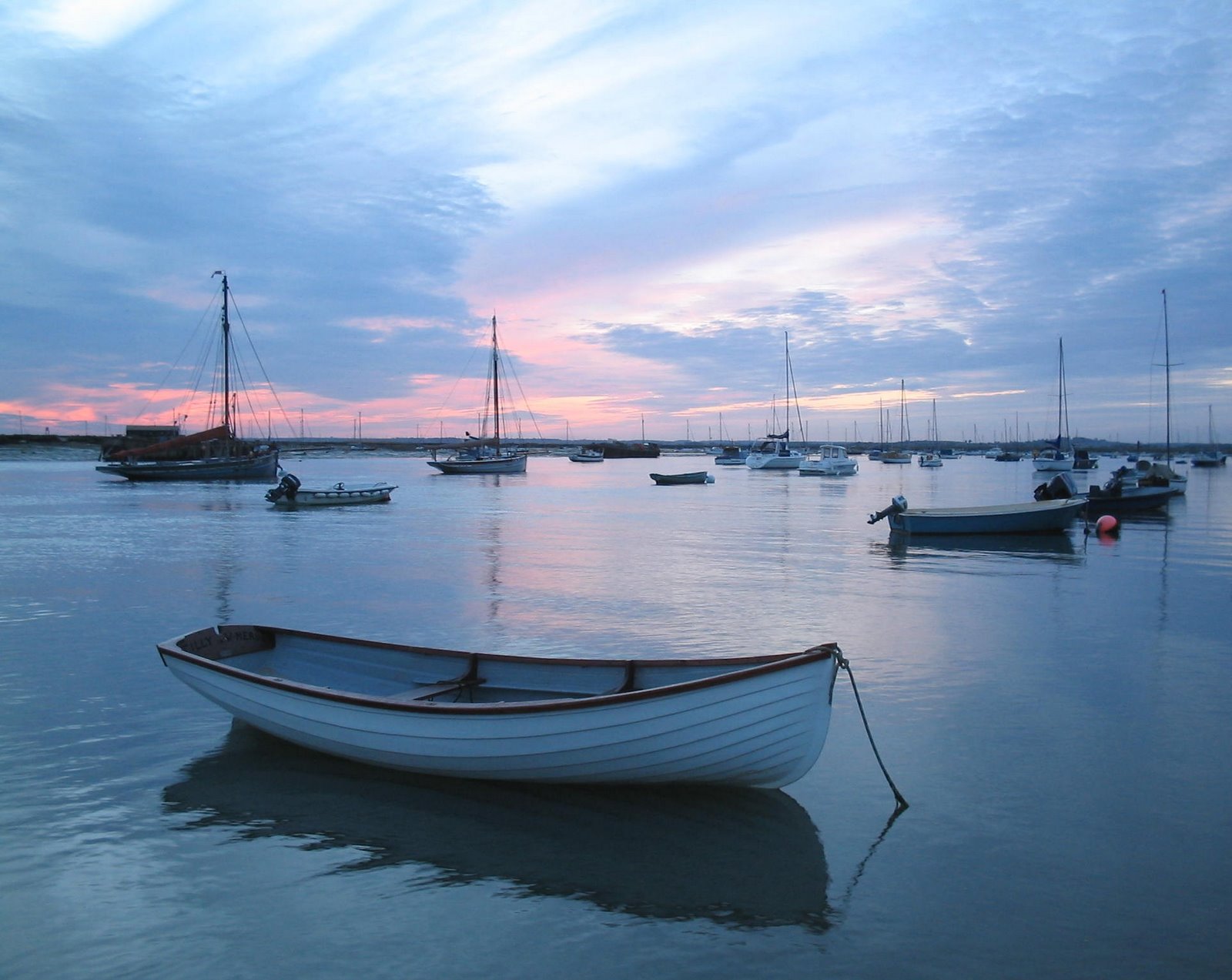
Here's West Mersea at sundown today - complete with splashing labrador and the more distant sound of several thousand birds noisily settling down for the night.


Sunday, 13 January 2008

Love behind bars

A Man in the Zoo is a short novella by David Garnett (1892-1981), bookseller, publisher, literary editor of the New Statesman and sometime resident of Charleston, whose second wife was Angelica, daughter of Duncan Grant and Vanessa Bell.

John Cromartie and his girlfriend, Josephine Lackett, have an argument about marriage, during which Josephine retorts that Cromartie really should be an exhibit in the zoo. In an impulsive act of love scorned, that is exactly what he decides he will be. He moves into the Ape House at the London Zoo, in a cage between the orang-utan and the chimpanzee. Unsurprisingly, this doesn’t exactly solve any of the problems between the pair of lovers, but it does raise a number of interesting dilemmas.
This quaint but interesting period piece dates from 1922. As do the assumptions about class and race around which are ingrained in the both the author’s and the characters’ thinking (some of which make for uncomfortable moments for the modern reader). What hasn’t dated – and part of what makes it a delight to read – is its analysis of the violent (sometimes from one minute to the next) swings between love and contempt, hope and despair, wanting and not wanting, decision and indecision which characterise an abrupt hiatus in a passionate relationship. Are the tqo utterly incompatible . . . or absolutely made to be together?

The dramatic withdrawal of Cromartie from both Josephine and the polite society to which he is accustomed (indeed from any form of society, save that of a wild cat who becomes his companion, and briefly, another man who moves into the next-door cage as the zoo seeks to extend the experiment and capitalise on the newfound popularity of its Ape House) highlight aspects of his character and of Josephine’s which neither had realised about each other, nor about themselves.


The other two good reasons for reading A Man in the Zoo is the lovely woodcut illustrations by Garnett’s first wife, Ray, and the spare, understated grace of the writing.

The Vintage Classics edition I have also includes another novella, Lady into Fox, which I haven’t yet read, but . . . it’s on the list.

If you’re not familiar with the intricacies of the relationships within the Bloomsbury Group, there’s some interesting background on where David Garnett fits in (and it was complicated - weren't they all?) here .

Saturday, 12 January 2008

Rushing around . . .

Went to the West Mersea Panto today with SD#3 today.


Babes in the Wood, it was.


Oh no it wasn't!


Oh yes it was!


Also went to a shop and walked with SD#2 and the dog on the beach.

Hectic pace of life here on the Muddy Island, sometimes.


Tomorrow I will be going early to Colchester Rugby Club to watch SD#3 training with the Under-6s. SD#2 will be playing U11s away matches in Braintree. SD#1 will, as usual, be 'shadowing' the club physiotherapist, and getting some hands-on practice with various injured limbs belonging to chaps in the Under 15s - not a bad form of work experience for a 14-year-old girl, if you ask me!


There's just something about rugby . . .


Reading other people's books

One of the great pleasures of staying in other people’s houses is, of course (and with permission), reading other people’s books. It’s a serendipitous thing. Instead of browsing through shelves, one will often pick up the nearest thing to hand, something off the pile of newly acquired books (if it’s Christmas or birthday time), or from the shelves in the guest-room which – depending on the household – often house either the least favoured, unread books, shunted in there to get them out of the way, or a thoughtful selection of light reading compiled with overnight guests specifically in mind. The great thing is that, whatever one dips into, it is quite likely to be something one wouldn’t otherwise have thought of reading.


One of the books which I read in this way over Christmas – lent to me by my brother-in-law (who hails from North of the Border) - was Bill Duncan’s The Wee Book of Calvin. Which is a strange and surprising little volume, whose appearance entirely belies its contents. And this is intentional, as Duncan explains in his Introduction:

'This project started life as a mischievous, ironic take on the plague of ‘Little Book’ publications: you know, the sort of irritatingly positive-looking things that infest the ever-expanding ‘Mind and Body’ section of your local bookstore. Those bland, emotionally glib ‘New Age’, touchy-feely self-help guides . . . offering an instant path to inner peace, the child within and off-the-shelf spiritual enlightenment. And all this, without anything as painful as though, hard ideas or intellectual effort . . . I looked with mounting incredulity and dismay at the promiscuous glut of Little Books . . . Faced with this loathsome onslaught, I was convinced the world needed to hear a different kind of voice . . .’

The voice Duncan presents is the voice of the Kingdom of Fife in the East of Scotland. Here he has collected together aphorisms which sum up the Calvinist outlook of those who toiled for generations in the mines in a cold, grey landscape, or fished in the cold, grey sea.

Hope is the dream o a foolish man.

If it didnae hurt, it wiznae worth daaein.

A glower says mair than a smile.

Dinnae expect onything an yell no be disappointed.

Hang a thief when he’s young an he’ll no steal when he’s aald.

and one which distills the essence of all the rest:

First braith, beginnin o yer daith.

Yet, as Duncan explains in his first essay (which you can read here), the more he pondered these snippets of wisdom, the more he felt the need to put them in context, and here’s what makes this book so much more interesting than it would at first appear.

The doom-laden ‘sayings’ are interspersed with a series of beautifully written autobiographical essays, recounting the author’s childhood life with his grandparents. His grim, sour, stoical grandmother – a staunch Presbyterian, whose world revolved around the themes of Salvation, Damnation and Redemption - and his courageous, whisky-sustained grandfather, who, to his wife’s eternal shame and anguish, was an Unbeliever.

‘From my Grandfather I inherited my love of black clothes, silence, haar, November, cloud formations . . . the sudden lash of rain against a window . . . the first skein of geese arriving across a darkening late-September sky heralding another Winter.’

The book persists with it's 'little book' theme and ends with a rather silly 'quiz', so readers can discover whether they are in fact closet Calvinists: 'You write only in black ink'; 'you feel suddenly and unaccountably sad during moments of pleasure or relaxation with friends'; 'You prefer your own company to that of others'; 'Your favourite confectionery product is Fisherman's Friend - Extra Strong', and so on and slightly tediously so on. Which makes the 'irony' of the enterprise rather too heavy-handed and I wondered whether it was the publishers, rather than the author, who ploughed on with this aspect of the book. (Oh, and it has an entirely hideous cover, which similarly fails to be ironic and indeed inclines one to read this surreptitiously hidden behind another book!)

But the musings on themes of belief and unbelief, climatic and human coldness, and above all the infinitely complex relationship between landscape and language, weather and linguistics are not only completely fascinating but so moving and poetic that I decided to find out more about Duncan.

He is a writer, poet and teacher, now based in Dundee. His collection of short stories, The Smiling School for Calvinists, was shortlisted in the 2002 ‘State of the Nation’ quest for the books which say the most about contemporary England, Wales, Northern Ireland and Scotland. An extract from Duncan’s essay in the book Scottishness - a collection of essays on national identity - can be read here .


And, in one of those pleasing bits of circularity in life, I also discovered that Bill Duncan paired up with another of my (relatively) recent ‘lucky finds’ - singer/songwriter, James Yorkston, on the Ballads of the Book album (the project has its own website , which takes an inordinate amount of time to load, and is almost worth the wait).

If you’re not familiar with James Yorkston – here he is singing ‘Steady As She Goes’ – accompanied by a quirky but rather lovely video.


Thursday, 10 January 2008

Gladys Peto


Regular readers will recognise this book - I mentioned it in my recent post on Books I Would Save From a Fire.


My copy of Gladys Peto's Bedtime Stories belonged to my mother - a Christmas gift from a family friend in 1933. I first made its acquaintance when I was 7 and lying in a darkened room with a bad case of the measles. The illness affected my eyes, so I couldn't read, or even look at pictures, myself. Instead, my mother spent as much of her time as she could reading aloud to me - and once she'd worked through the books on my shelves, she clambered around in the loft and retrieved Enid Blyton's Yellow Fairy Book (but not the one everyone else knows - this was another by the same name and I've never been able to find mention of it, even on eBay), a couple of other story books from the 1930s, My Farm and My Pets, and - most intriguingly of all - Gladys Peto's Bedtime Stories.

How I loved these stories. They were quirky and weird and unlike any stories I'd heard before. My mother - who had been a Miss Read-type village schoolteacher before I came along - was (and is) absolutely brilliant at reading to children. The characters in the stories came alive - most of them rather spoilt, upper middle-class, Home Counties girls, with bobbed hair, home from boarding school for the hols.

But the adventures in Peto's stories were as far removed from my staple Famous Five and Secret Seven stories as could be. No adventures on rafts and in smugglers' caves for these young ladies - oh no. Here were encounters with mermaids and strange old women who were (or maybe they weren't) really witches, a shopkeeper with a sheep's head, flying topiary, secret rooms, talking white rabbits garlanded with flowers. Surreal rather than merely whimsical, Peto's world made a kind of sense once you'd surrendered to it.


The tales are so ingrained in my childhood memories that it is difficult for me to read them afresh and assess them dispassionately.

Once I'd recovered from the measles and the curtains were opened once more, of course I discovered the sheer joy of the illustrations. Sinuous, long-legged children, in stylish, fashion-plate costumes, populate the pictures in a languid and detached manner. The subtle, carefully co-ordinated colours seemed quite alien back then in the psychedelic 1960s; the penmanship was, even to my childish eyes, something quite special and different from anything I'd encountered in children's books before. What intrigued me most was the way that every picture quivered on the brink of bursting into flower. Stylised flowers appear everywhere, gratuitously - they clamber over dresses, drift across furniture, burst through floorboards, and lodge in odd corners of nearly every picture, as if they simply can't keep away.

It's really no exaggeration to say that - young though I was when I spent hours poring over them - Peto's illustrations changed the way I looked at the world around me and inspired an interest in patterns, textiles and illustration.

What a joy it was when my grandmother donated some (then) ancient clothes to the Dressing-Up Box, to recognise in the fabrics similar stylised floral designs. (Oh Lord - supposing they'd been genuine Peto designs that ended up sodden at the bottom of the garden or cut up to make clothes for Sindy!! Ghastly thought.). From that point on, I could spot a 1920s/30s textile design a mile away - and in my own more - ahem - 'sinuous' days, I loved to find, adapt and wear 'vintage' clothing from that era.


I'd never bothered to find out more about the author/artist of this special book, but a bit of Googling recently has revealed that Gladys Emma Peto (1890-1977), worked as an artist, fashion designer and illustrator of books for children, including (like this one) collections of stories which she wrote herself. Her advertising illustrations for Ovaltine and many other well-known products were seen everywhere on posters and in magazines and she also designed pottery, textiles and dresses.

After school, she studied at the London School of Art. Later, in the 1920s, with her husband, who was in the Royal Army Medical Corps, she travelled to Malta, Cyprus and Egypt. Her drawings, paintings and writing from this period were published in J M Dent’s ‘Outward Bound Library’.


Peto’s Wikipedia entry is short but give some interesting background and reveals her to be quite ahead of her time in commercial terms: what follows is a quote from the Wiki page:

“Sometime in the 1920s the Empire Annual for Australian Girls published ‘Poster Art Work for Girls, A Talk With Miss Gladys Peto the Well-Known Poster Artist.’ Peto there discusses her beginnings. Her family was not especially artistic, except for herself. As a girl in Maidenhead, she would go out ‘in her father's trap’ and notice interesting people along the way. She would get home and sketch them. From thence to High School then Art School. After a few years learning academic techniques, she approached her various editors and publishers with her sketches expecting instant success. She didn't find it, but sold two little drawings. It was a beginning. ‘And [her] family's somewhat discouraging queries as to how I was going to live on that amount did not debar [her] from trying further.’ In keeping with the Empire Annual's mandate to offer guidance, Peto informs the interviewer that a girl with training, talent and inventiveness might well be able to make her way as a commercial artist: ‘there is a good living to be made from this particular type of artistic endeavor.’ No figures are mentioned, but it is noted that ‘several people are aware that this young lady, as one of the best-known depicters of ‘fashionable life,’ and a designer of posters which attract much public attention, makes an annual income which many men in very high positions might well envy.’”


Hope you enjoy these pics (it was difficult to decide which ones to scan!) - click on them to enlarge.

We're all reporters now

Just listened to a fascinating programme on Radio 4 - New Kids on the Blog - in which Matt Frei investigated the revolution in news media and asked whether blogs, camera phones and YouTube are making the role of traditional journalists redundant.

There seems little doubt that these phenomena are changing the political landscape of America, with presidential candidates announcing their campaigns on YouTube, politicians being caught on mobile phone using racist language (and subsequently having to stand down), and millions of people eschewing newspapers in favour of a daily surf through the blogs.

A journalists argued on the programme that, not having the resources of a newsroom at our disposal, bloggers cannot hope to compete with or replace the 'trained' journalist. And, moreover, those who obtain their news only from blogs will gravitate towards those which reflect their own views, and hence 'the people' will be less well informed, so the whole revolution is a Bad Thing. (Hmmm. Do those who read only The Sun or The Daily Mirror have a well-rounded, in-depth grasp of international news and a balanced diet of views right across the political spectrum?)

This already seems an outdated standpoint, and I can't believe it's one shared by any but the oldest generation of 'traditional journalists'. With most newspapers now running a huge network of blogs themselves, to which other bloggers of the world refer and link on a frequent basis, there is a constant exchange of ideas and views which is healthy, vibrant, challenging and generally to be celebrated. The programme dates the true democratisation of news to Boxing Day 2004 and the Asian Tsunami, when it was 'ordinary people' - eyewitnesses with phones and cameras - who took over the reporting of the disaster to the outside world.

I confess I hadn't myself grasped the astonishing influence of YouTube on US public life. Or the colossal scale of its reach - it's only been around for two years, but already its top-ranking video clip, The Evolution of Dance , has been viewed a staggering 71 million times (it says 64 million on the programme but the larger figure is given on the clip itself), and seven hours'-worth of video is uploaded every minute of every day.

I missed the very beginning of the programme, but luckily it's possible to listen to it again, here , for the next six days.

Busy not blogging (but still reading other people's)

Too busy to blog - deadlines to meet, children off school sick, walking the dog by night so not even taking any TBTE photos to post in lieu of words . . .

BUT - I have had time, it seems, to land on some excellent blogs since Christmas - some of them are brand new, others have been going for ages but I've only just discovered them (I'm so out of touch!). Here are some current favourites (in no particular order):

John Lenahan's Year of Gratuitous Socks - a magician decides to wear (and blog about) a completely new pair of socks every day in 2008 - but very soon discovers that he has a lot more to write about than socks. Alternately funny and deeply moving.


A New History of Love - a debut novelist's journal

It's A Crime! (or a mystery) - a lively book blog


Read-warbler - another lively book blog


Cynical Steve's Doggerel Blog (think I've mentioned this before, but it's worth mentioning twice!)

Logophilia - a brand new words and books blog, which looks very promising

The Hesitant Scribe - the musings of a PhD student and would-be author whose life has recently taken an dramatic turn

Sarah's Writing Journal - Sarah Salway's random notes on writing and other things

Santa Claus Blog (bet you didn't even know F. Christmas had a blog, did you?)

And Marine Mystery writer Pauline Rowson has started a new blog for aspiring writers, with guest posts by established authors: Authors on line workshop


. . . well, so much for a 'quick interim post' - this one seems to have taken me ages! Please click on some of these links that I'll feel that my laboriously fiddling around with html has all been worthwhile!

Saturday, 5 January 2008

Typographical musings on a greeney-bluey theme

Received an emailed newsletter this week from Myfonts , listing their Top Ten Fonts for 2007.

Myfonts stocks over 58,000 fonts and a quick surf of their new fonts page is always an inspiration.

Here are some from the Top Ten:


And while on the subject of typefaces, I should mention how very much I am enjoying those of my (‘surprise’ – ahem!) Christmas presents which came all the way from the Green Chair Press in Burlingame, California.


The gorgeous, luminous greens and blues of Susan’s short-run broadside ‘What Matters in Life’ complement the message of the silver-inked letters, which I have a feeling is going to be a pertinent one for 2008. (This scan doesn't do it justice at all, unfortunately.)


And here are the coasters (more bluey-greens).


And lastly the calendar, now sitting in chic splendour on my desk.

January’s (greeney-blue!) haiku reads:


‘first dream of the year
I keep it a secret –
smile to myself’


There are only 199 copies of these calendars in the world, apart from mine, and it amuses me, in an idle way, occasionally to wonder about the other people lucky enough to have one, and the other desks upon which my calendar’s siblings sit.

Finally, the very best thing about starting this blog last summer has been making the online acquaintance of so many interesting, friendly, generous and inspiring bloggers from all over the world – some of whom I feel I’ve known for ages, though it has only been a few months. Susan at Green Chair Press is one such, and another – whom I 'met' more recently – is Cathy, over at Teacher Features: Thoughts on Bookmaking with Kids , which is the blog of the San Fransisco Centre for the Book. If you have children or are involved in teaching arts subjects, then I would very much recommend a visit – it’s bursting with ideas and resources on book-related projects for children of all ages.

Friday, 4 January 2008

Get lots of books for Christmas? It's time to ask THAT question again!

Why do we hang on to books when we've read them? I've mused upon this question before, but it's become very topical again, as many of us survey the stacks of newly acquired books which sit around our homes between small piles of pine needles and (in my case at least) larger piles of stocking-filler toys, 'jokes' from crackers, discarded sweet wrappers and instructions for Airfix Spitfire kits, and wonder where on earth we're going to put them all (or even when on earth we're ever going to have time to read them all!)

Here’s a much blogged-about article from the Times on New Year’s Day, which I imagine everyone’s read by now. (If you haven't, you should!) I'd intended to link to it on the day it appeared, but what with leaking water tanks and dripping ceilings and still feeling quite sofa-ish, I didn’t bother and now it’s very old news, but it raises so many pertinent points that I feel it's worth revisiting.

I have tidied books – and even dusted them! - before selling a house, but I have never ‘got rid of them’ before putting up the For Sale sign. My house, too, is stuffed with books, yet each of the three homes I’ve sold has been snapped up within a week of going on the market, so the books can’t have been quite so off-putting as the estate agents and makeover artists claim. (On the other hand, they were Victorian/Regency 'properties', rather than shiny new Executive Homes, so maybe a bit of homely clutter was what people were expecting . . . ?)

Valerie Grove touches on many issues close to the heart of bookish types in the course of her delightfully rambly piece. Having listened to a Radio 4 dramatisation of 84 Charing Cross Road over Christmas, Helene Hanff’s stringent views on the matter of keeping books after they’ve been read (or indeed if there is little prospect of their being read) had already sprung to mind before I’d reached that part of Grove's article.

I’d always found it rather shocking that Hanff, the author of the original booklover’s book, should have taken so cavalier an attitude to books as ‘objects’, worthy of love and respect for their appearance, tactile qualities, smell, associations and meaning, quite apart from their content. Surely a book is (or can be) far more than the sum of the words on its pages? We don’t (or shouldn't) keep them to show we’re ‘well educated, right?’ – sometimes we keep them simply because they bear the handwriting (or even merely the unseen fingerprints) of a lost or departed grandparent, parent, lover, brother, sister, friend. More public than a letter, more likely to survive and to be passed down the generations or even cherished by a stranger.

Here’s a test: if you had to arrange your books in the order in which, if pressed (hard), you would be prepared to see them burned to a cinder, how would you line them all up? And why?

I know how I'd answer, and it’s entirely to do with the meaning, to me, of the books as artefacts. It’s little or nothing to do with their printed content. I would willingly offer up some of my favourite and most beloved novels to the flames – the Ian McEwans, the Carol Shields, the Salman Rushdies and Anthony Burgesses, the William Trevors, Anthony Powells, Alan Bennetts, Antonia Whites, Rosamund Lehmans; all the ‘classics’ - the Brontes, Jane Austen, George Eliot, Katherine Mansfield, James Joyce, D H Lawrence, Dickens, Virginia Woolf, Tolstoy, Shakespeare, Chaucer – whooosh! Up in smoke you go! Why? Because they could be replaced. Any time, anywhere, at large or small cost, depending on edition.


What would be last on the list? Why, of course, six novels by Ethel M. Dell (never read – too awful!), but passionately annotated by my grandmother and bearing her youthful signature on the flyleaves;


Zen and the Art of Motorcycle Maintenance – annotated by late-teenage me throughout and inscribed as a Christmas gift from someone I thought I would one day marry (but didn’t, thank goodness!); Pilgrim’s Progress, owned by my beloved godmother and great aunt Elsie; two letterpress volumes of the Gospels, with illustrations by Eric Gill; my nearly complete set of Thames & Hudson World of Art volumes – some dating back to University days, the rest a reminder of my years at T&H;


my set of Penguin 60s – to which I am still adding (how I wish I’d splashed out on the complete collection at the time); Now We are Six and When We Were Very Young – hardback editions from the 1960s, inscribed by my parents, given on my 6th birthday and subsequent Christmas, the poems memorised by me, aged 6 and 7 long after I should have been asleep; school prizes – both my own and those of my forebears (the former a reminder that my schooldays, while not always idyllic, were not entirely in vain, and including Enid Blyton’s Five Go Off in a Caravan, which I won, aged 7, for ‘progress’[!] and read seven times over - my first 'long novel' and almost unbearably thrilling);


my mother's Gladys Peto's Bedtime Stories from the 1930s, with fabulously quirky art deco illustrations (I can feel another post coming on here) which I used to read when ill (as I was quite often, with ear infections) in bed;


little kid-bound volumes of poetry (Longfellow, Wordsworth, Byron) given by my grandfather to my grandmother before they were married (and it was, as so often in those days, and with the Great War to be survived in the interim, a long betrothal);


the Ladybird and Observer's Books of plants, trees, pond life, insects (and spiders), seashore, rocks and minerals, etc etc, which I read by torchlight under the blankets in bed aged 8 to 10 and which were patched with now yellowing sellotape against the ravages of frequent use;


various ancient tomes from the seventeenth and eighteenth centuries, most in Latin, never read, but acquired for the sheer perfect beauty of their letterpress printing, their divine rag paper and their intoxicating smell of ages past;

my collection of original Virago paperback reprints of women writers’ fiction, published in the early 1980s – lots of people scour eBay for these now but I have a huge collection because I worked in a bookshop when they were first published and scooped them up with my staff discount – they were seminal to my literary and feminist awakening!

And so it goes on. This list is off the top of my head, at the end of a long working day - I'm sure a more considered and leisurely assessment would bring others, screaming 'save me!', to the fore.

But the obvious conclusion is that the books to which I am most passionately attached are those which, as objects, hold some personal meaning far exceeding their printed content. They quiver with the history of Me.


Which means that the whole enterprise of keeping books is one of personal vanity!! Arrghh! So maybe it’s not a Good Thing at all. Perhaps it would start me off on the road to redemption if I were to start a big bonfire right now?

Help! What should I do? What would YOU do?


Please advise soonest.

Tuesday, 1 January 2008

On Angel Wings

Here's this Christmas's most treasured addition to the Christmas Book Box - On Angel Wings by Michael Morpurgo, with illustrations by the incomparable Quentin Blake .

It's a lovely little hardback book which tells the tale - as recounted by an old man to his grandchildren - of a young shepherd boy, left behind in the dark to look after the sheep on the night of the first Christmas, while all the other shepherds have gone to visit the stable in Bethlehem.


The Angel Gabriel returns to the hillside, scoops up the forgotten boy and flies him post-haste to see the newborn King (leaving some of his herald angel friends to look after the sheep). The boy arrives at the stable before the rest of his family and is thus the very first visitor. He gets to hold the baby and leaves his hand-carved crook as a birthday gift before Gabriel whisks him back to his flock before the others return. He never tells a soul about his adventure until many years later.

The story is beautifully told but, as might be expected, it's Quentin Blake's gloriously inventive illustrations which make the book so special.

And this copy is more special still, because it's been inscribed for Small Doyle #3 by the artist himself. What a fabulous Christmas present!


Quentin Blake's website is well worth a visit - there is a 10-minute video about the genesis of a picture book here and short film about Blake's long association with Jackanory on BBC1 here (he worked on 150 Jackanory programmes!) and a slideshow with views of his studio, which is just delicious.